Tillage Reduction, Biochar and Living Clover: AFT Partners with Island Grown Initiative to Explore and Advance Soil Health Practices
It was a clear day in late May when Jeremy Barker Plotkin, Senior Conservation Planner with American Farmland Trust (AFT), steered his bike off the ferry at Vineyard Haven. Hitched behind him was a trailer loaded with soil sampling equipment. Soon he was pedaling through Tisbury, on his way to meet Andrew Woodruff, Regenerative Agriculture Consultant, and Tim Connelly, Farm Director at Island Grown Initiative at the non-profit’s 42-acre farm. The farm is a core project of IGI, which works to build a regenerative and equitable food system on Martha’s Vineyard, partnering with local schools and hunger relief organizations, and donating about a third of its produce to hunger relief efforts.
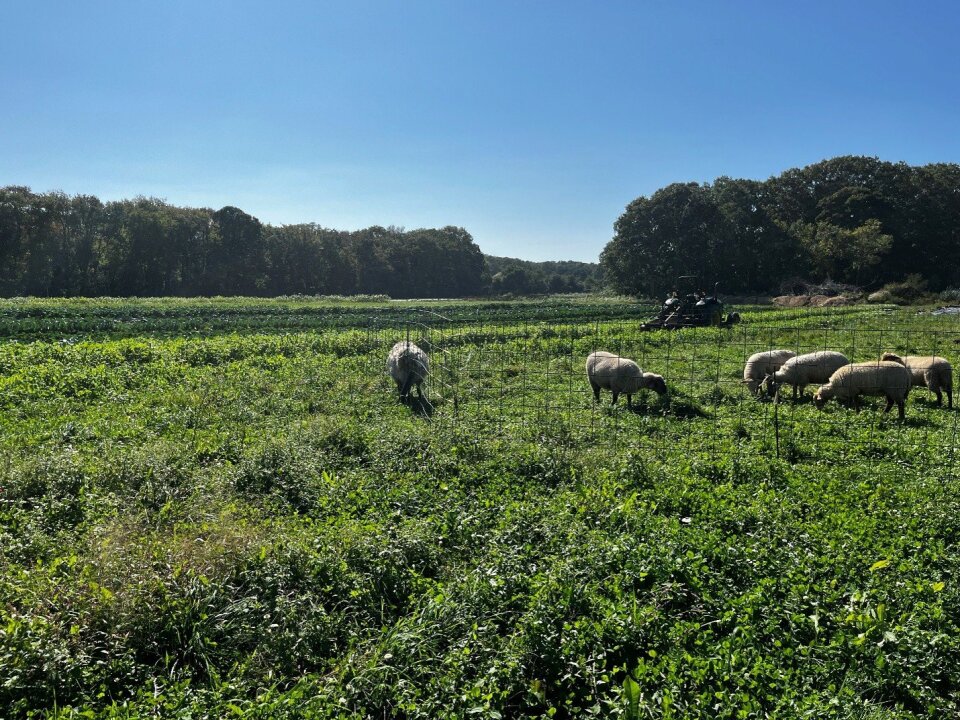
Andrew had been helping IGI transition to low- and no-tillage practices since 2018—using tarps, landscape fabric, grazing, and diverse cover crop mixes on a 2-acre parcel of the farm. In 2020, the farm drastically increased its production acreage in response to the pandemic. They wanted to keep going with the mission of tillage reduction, but scaling up those practices required new techniques to meet the efficiency demands of increased production. “It was helpful hearing other farmers in the region who were testing [these practices] it in a similar scale and who were making these systems work from a business perspective,” Andrew shared.

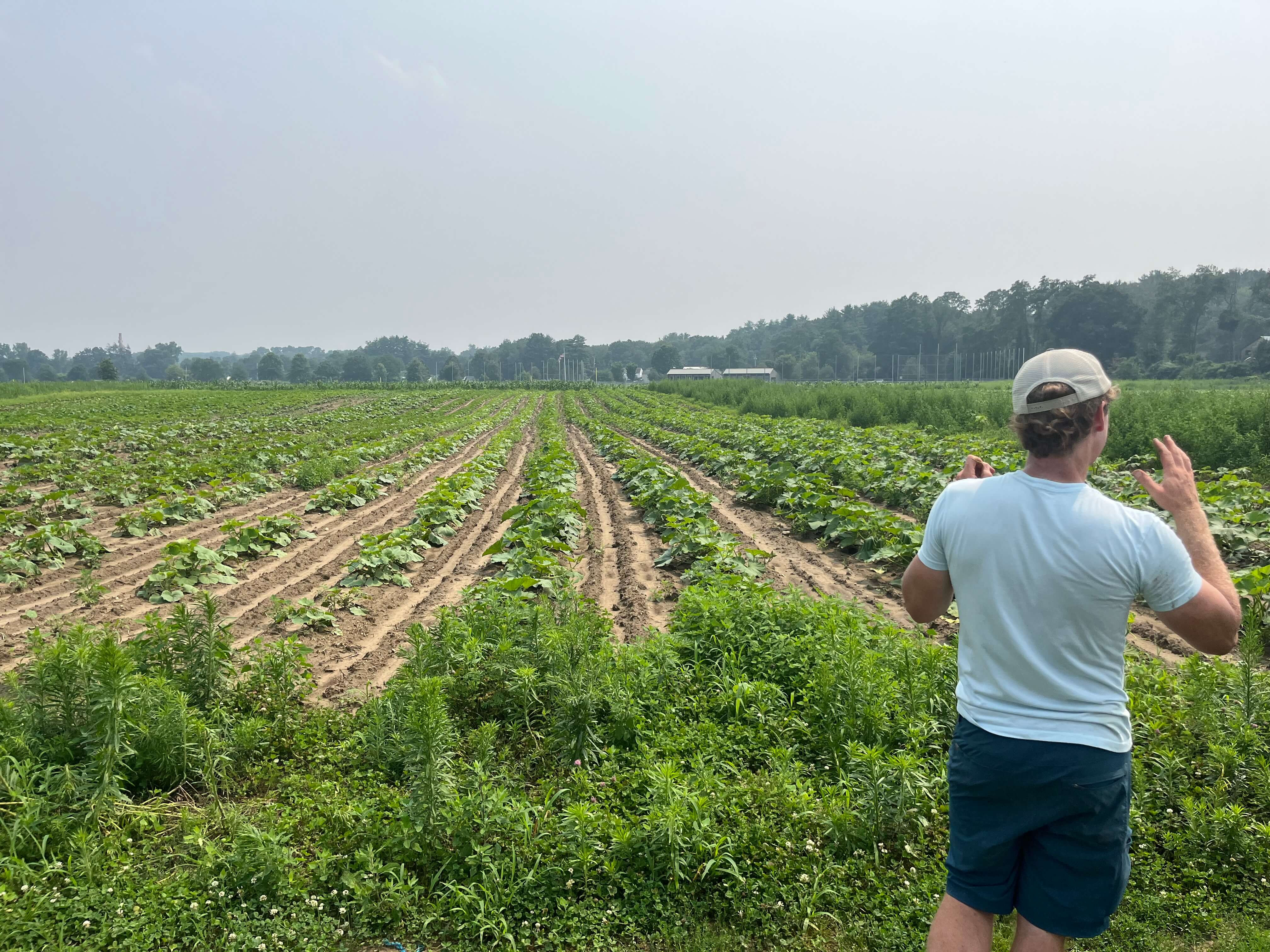
In 2021, Jeremy was still a full-time farmer in Amherst, MA, and several years into his own tillage-reduction experiments. He worked with AFT’s New England team to hold a field walk at his farm to share about his practices—Andrew wasn’t able to attend, but was intrigued by the description of the event. When an errand brought Andrew out to Western Massachusetts, he drove by the farm. Finding Jeremy in the field, he introduced himself, and the two began exchanging ideas on tillage reduction.
Later that same year, Julie Fine and Caro Roszell began inviting farmers to apply for the Farmer-Led Innovations Program (FLI), a two-year facilitated peer-learning program that provides financial and technical assistance to experienced organic farmers exploring tillage reduction. “There wasn’t an existing body of knowledge about how to reduce tillage on tractor-scale organic farms,” explained Julie Fine. “We knew that the only people who could share that knowledge were practicing farmers. Peer knowledge exchange is essential for actual, effective implementation, especially for cutting-edge and particularly complex practices.”
Andrew and Tim joined the first cohort, using the award to buy parts to develop a custom adjustable implement for strip-tilling into cover crop residue and living clover mulch. They iterated on designs and associated systems, reporting back regularly to the cohort for feedback. “The FLI program—it really inspired us to build the strip tiller,” Andrew said. “We’re constantly learning how to use it; it’s been hugely impactful for reaching our soil health goals.”
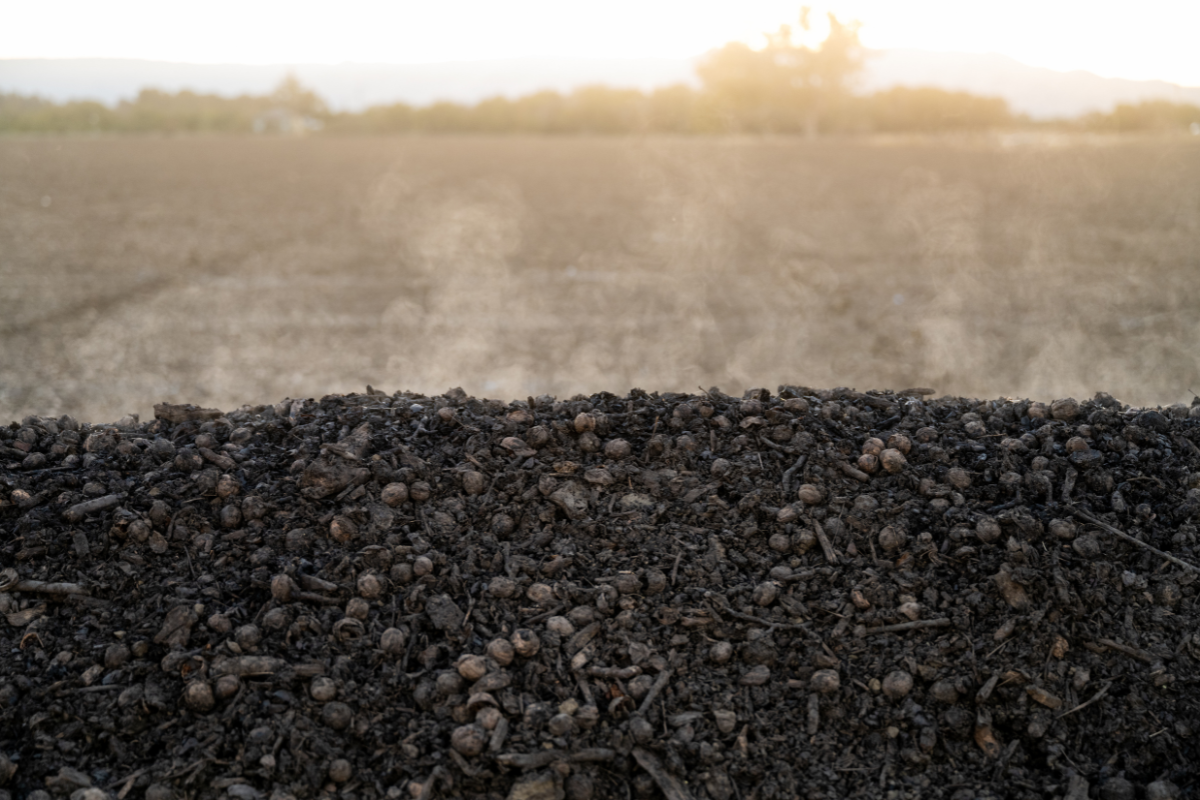
Meanwhile, Jeremy transitioned out of farming and joined the team at AFT. He was excited to use his 25 years of farming experience to help other farmers advance their goals. In his role, Jeremy assists farmers through existing programs of the Natural Resources Conservation Service (NRCS). One NRCS approach, adaptive management, helps farmers run on-farm trials to evaluate new practices and inform broader adoption. Jeremy knew IGI was well-positioned for this work, given its explicit focus on education and knowledge-sharing. He worked with the team to secure funding to study soil health impacts of living clover mulch. Through AFT’s biochar project, they added a second trial, more than doubling the number of plots. With expanded funding, they broadened data collection to include nitrogen, soil moisture, yield, and soil health metrics, and compared biochar, clover, and combined treatments, an opportunity to test whether the practices deliver synergistic benefits.

“AFT’s participation has inspired us to be more disciplined in our experimentation,” Andrew said, noting improved yield tracking and evaluation of outcomes. For Jeremy, the collaboration offers a chance to assess not just individual practices but the entire farm system. “It’s genius what they’re doing,” Jeremy said.
“The base soils there are pretty sandy, which are some of the more difficult soils to make lasting progress on soil health. They’re developing equipment and systems together and are pushing the boundaries of regenerative agriculture, and doing it remarkably well.”

“One of the important roles we play as technical support providers is developing a detailed knowledge of what soil health practices farmers across the region are trying. This allows us to cross-pollinate ideas and facilitate referrals between farmers. We also maintain a listserv for farmers to exchange ideas about tillage reduction and innovative cover cropping, and we convene farmers throughout the year at winter meetings and field walks,” explains Julie Fine. “The farmers at IGI have been really active and important contributors to those convenings and discussions.”
“As a nonprofit farm,” shared Tim, “we should be [experimenting], and potentially taking the hit before other farmers lose their shirt trying something that doesn’t work. It’s part of our mission, which includes climate, land management, and education.”