Chase Hill Farm: Building Soil Health Through Silvopasture and Smart Grazing
At Chase Hill Farm in Warwick, Massachusetts, a summer field walk showed how one farm family partnered with AFT technical assistance providers to meet their soil health and resilience goals.

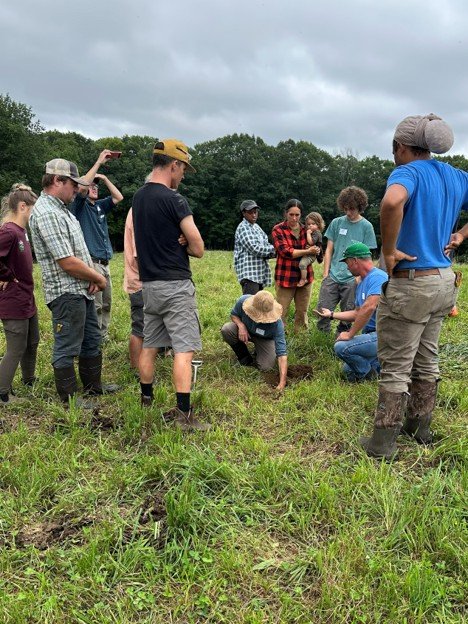
On a warm evening in mid-August, a group of farmers and staff from Community Involved in Sustaining Agriculture (CISA) and American Farmland Trust (AFT) walked the pastures of Chase Hill Farm in Warwick, Massachusetts. The field walk focused on a question many livestock farmers in New England are asking: how do you manage pasture and farm infrastructure through flooding, drought, and extreme heat?
A Grazing Legacy, Backed by New Resources
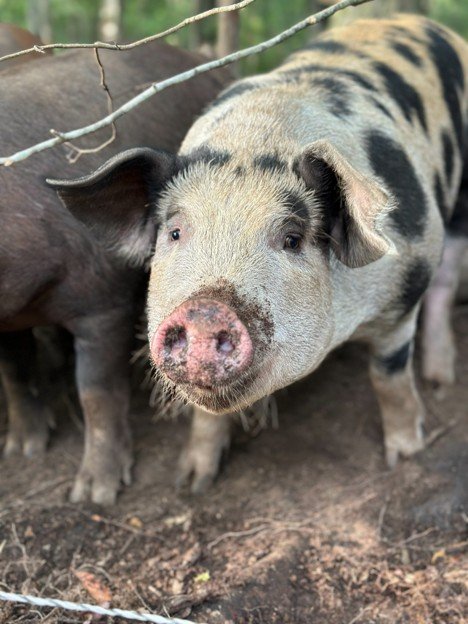
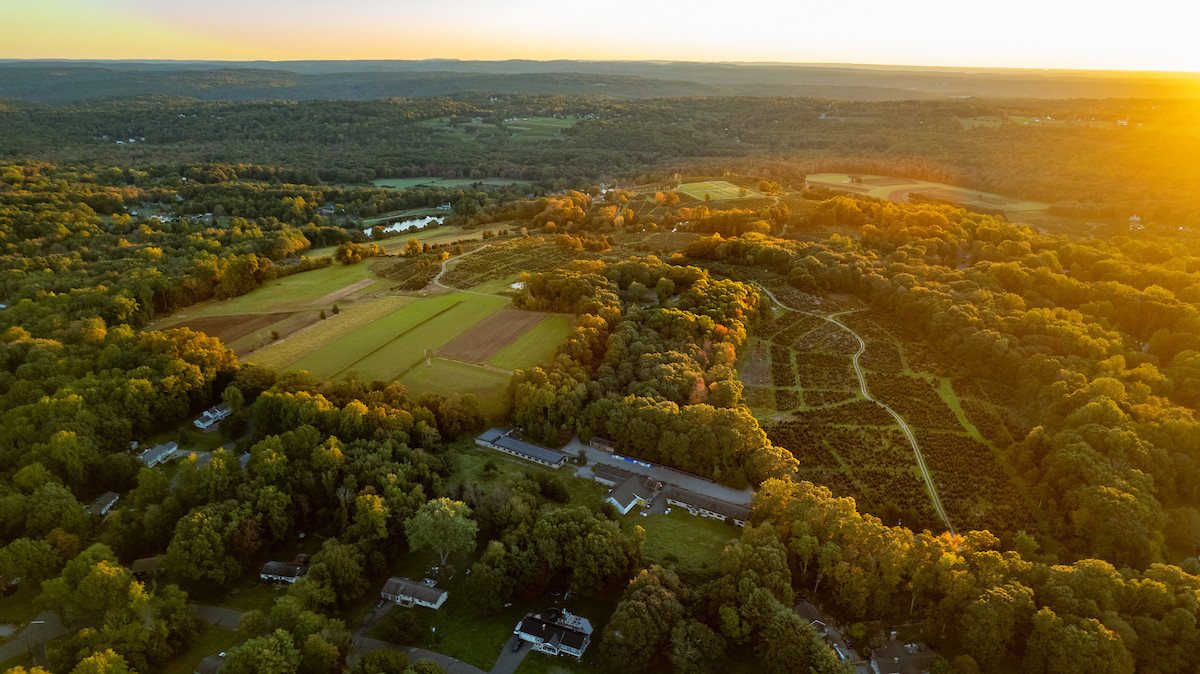
Benjamin and Laura Wells-Tolley have run Chase Hill Farm's organic dairy, meat, and cheese operation with help from their kids since 2017. They raise grass-fed Normande cows, pigs, and chickens on 198 acres protected by a conservation easement with Mount Grace Land Trust. The farm families stewarding the land have been grazing for decades—but getting financial assistance to keep doing so amid growing challenges took some help.

That's where Max Breiteneicher comes in. As AFT's New England Livestock and Grazing Specialist, and a former dairy farmer and cheesemaker himself, Max works with farms like Chase Hill to connect strong on-the-ground practices with the funding that sustains them.
"Max has been tremendously helpful in getting farm roads improved, supporting grazing plans, hedgerows, fencing, and chicken houses," says Laura Wells-Tolley. "He's brought real financial resources to us." That funding has come through AFT’s Regional Conservation Partnership Program (RCPP), AFT microgrants, and grants from state agencies and other organizations.
"My goal is to understand what's happening on the ground at each farm, what its strengths are, and what it needs," Max says. "Then we figure out how to fund those needs." For years, the farm lane at Chase Hill was either a muddy mess or a dusty one, making it hard to reach the farther pastures. Working with NRCS (the federal Natural Resources Conservation Service), Max helped the farm secure a contract to build a passable road surface expected to last 20 years, a small fix with an outsized effect on how the whole grazing operation runs.
Building Soil Health, Pasture by Pasture

Much of the walk focused on practices that build pasture soil health. Caleb Smith, AFT's Agronomy and Livestock Specialist, discussed bale grazing and rotational grazing with Ben, Laura, and family members Ale Ruiz, Cassia and Jasper. The family members shared the field history: it had been bale grazed the prior winter, allowing winter manure and animal traffic to be better distributed, compared to the common practice of wintering in a sacrifice field. Caleb, Max, and the farm family pointed out soil health and forage quality indicators to participants, who noted the vigorous growth and low presence of undesirable plants in the field.
Chickens, Trees, and Layers of Forage

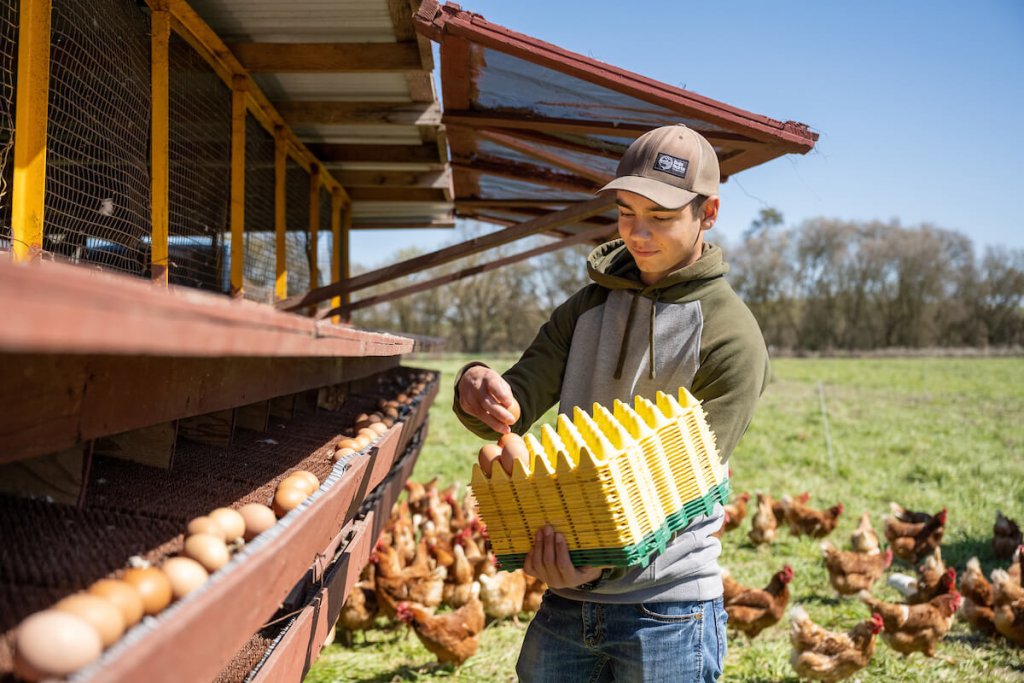
The group also toured the farm's poultry operation, where Alumi-coops have dramatically increased move efficiency, allowing more frequent moves while also improving predator protection. This has resulted in noticeably reduced stress on the birds and improved productivity. The next step is to begin moving the flock between hedgerows of persimmon, honey locust, and mulberry trees, integrating chickens directly into a developing silvopasture system.
The trees provide layered benefits, including shade, windbreaks, and nutrient-rich forage. Dried mulberries test at 18% protein, and the leaves run high in protein too. Honey locust pods add nutrition for livestock heading into fall, and the trees' dappled shade improves pasture grass palatability by smoothing its growth curve—slowing summer growth spurts and lignification, while increasing fall forage quality. Hedgerows of blueberry, aronia, apple, and willow, planned through AFT’s RCPP program, will also support dappled shade and microclimate benefits to pasture species and livestock alike.