Grazing & Livestock
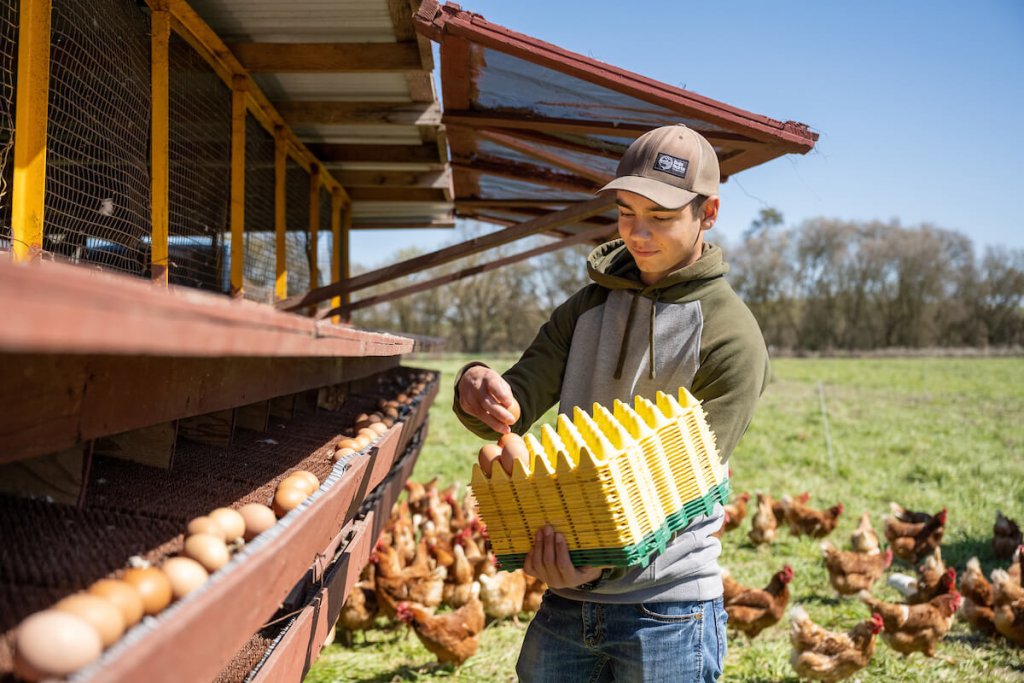
Grassland, pasture, and rangeland represent the largest agricultural land use in the U.S., covering over 650 million acres in the lower 48 states. This massive natural resource underpins much of the livestock production in the U.S., including almost 30 million beef cows and their calves, 9 million dairy cows, and 7 million sheep and goats. This land is also being increasingly used for other livestock species such as hogs and chickens and serves as an important resource and habitat for wildlife.
AFT’s Work in Grazing & Livestock
American Farmland Trust (AFT) has a team with diverse skill sets across all aspects of livestock production, including in soil health, forage agronomy, ruminant nutrition, grazing management, economics and marketing, and a history of working directly with farmers and ranchers around the country.
Much of the pasture and rangeland here is currently managed under continuous grazing systems that promote inefficient forage utilization, overgrazing, poor forage species diversity (monocultures), and, ultimately, poor environmental outcomes such as reductions in soil health and water quality. This inefficient use of grown forage increases production costs and lowers animal productivity, posing a significant threat to the livelihood of livestock producers.
Adopting better grazing management practices, such as rotational grazing, has been shown to, reduce feed and labor costs1, increase animal gain2and, carrying capacity, and extend the grazing season3. These benefits alone would significantly enhance farm profitability and viability. In addition to the direct economic benefits, better grazing management also enables greater forage species diversity, quality, and productivity while reducing erosion, and improving water quality and soil health4.

Grazing Networks
Peer-to-peer learning is one of the most powerful tools for promoting the adoption of farming practices that support the economic and environmental resilience of farmland and ranchland. It also helps build strong social connections within the farming and ranching communities. AFT is committed to using peer networks to scale up better grazing management practices that promote soil health and farm resilience. The following are grazing network projects that AFT is currently leading across the country.