Five Years, One Farmer-Led Cohort: What Vermont Dairy Farmers Learned by Working Together
Over the past five years, seven Vermont dairy farmers have participated in a farmer cohort facilitated by Cheryl Bruce, Senior Livestock & Grazing Specialist at American Farmland Trust (AFT), with support from the Dairy Business Innovation Center (DBIC). What started as a two-year pilot grew into a five-year effort after farmers pushed to continue this partnership. The group became a practical, farmer-driven space to share ideas, compare approaches, and experiment with new strategies in grazing, forage, and farm business planning.
This cohort offers a simple, effective, and replicable model for farmer-to-farmer learning. With strong facilitation, a flexible structure, and farmers steering the process, it demonstrates how peer networks can explore technical learning and business planning, while also having candid conversations that rarely happen elsewhere.

How the Cohort Worked
Rotating on-farm meetings, hosted by each participating farmer
One-on-one sessions between each farmer and the facilitator
Guest speakers chosen based on group interest
A mix of technical, financial, and planning topics, from grazing implementation to mission and vision statements
Meetings were entirely in person. If a date didn’t work or weather was bad, the group rescheduled rather than shifting to virtual. This helped keep conversations grounded in real farm conditions and helped the group build rapport.
Importantly, the DBIC grant deliverables were broad enough to give the cohort room to adapt. Farmers emphasized that this flexibility was essential. Caleb Smith of Dorset Peak Jerseys shared:
“If it’s flexible and you let people explore what they want to explore, the outcomes are much more impactful.”
This adaptability allowed the group to focus on what felt most relevant at any given moment—from seeding trials to business transitions to grazing tweaks after a tough weather year.
Farmer-Driven Learning
AFT provided structure and facilitation, but the farmers set the direction. Topics shifted based on what was happening on the ground. If someone was having an issue with paddock recovery, forage stand failure, or employee communication, the group made space to dive into it.
This approach made the program feel directly useful. As Nate Severy of Severy Farm, put it:
“You get to see everyone’s operation and pick their brain about what they’re doing and why. That’s really important.”
The cohort’s long duration meant ideas could be revisited, refined, and tested.
Across the five years, Vermont farmers explored topics such as warm-season annuals, gamagrass and other alternative forage species, ripsower interseeding, pasture renovation approaches, season-extending grazing sequences, helpful tools for communicating with family and farm staff, and mission and vision crafting.
Farmers said the group helped them take on projects they may not have pursued alone. As Scott Cleveland of Cleveland Farms noted:
“The whole process makes you think outside the box and look at things in a different way.”


A Culture of Trust
Nearly every farmer mentioned that the group worked because it was a space where people could speak openly without judgment. That is not always the case in farmer groups, where competition, pride, or comparison can limit honest conversation.
Cindy Kayhart of Kayhart’s Chalker Farm shared:
“None of us really knew each other, but we were all just comfortable. You shared stuff that you just don’t share, and I’ve never felt judged.”
This trust allowed farmers to ask better questions and give more useful feedback. They could talk candidly about failures or uncertainty — whether it was a cropping challenge, a financial decision, or a transition on the farm.
Seeing Other Farms Up Close
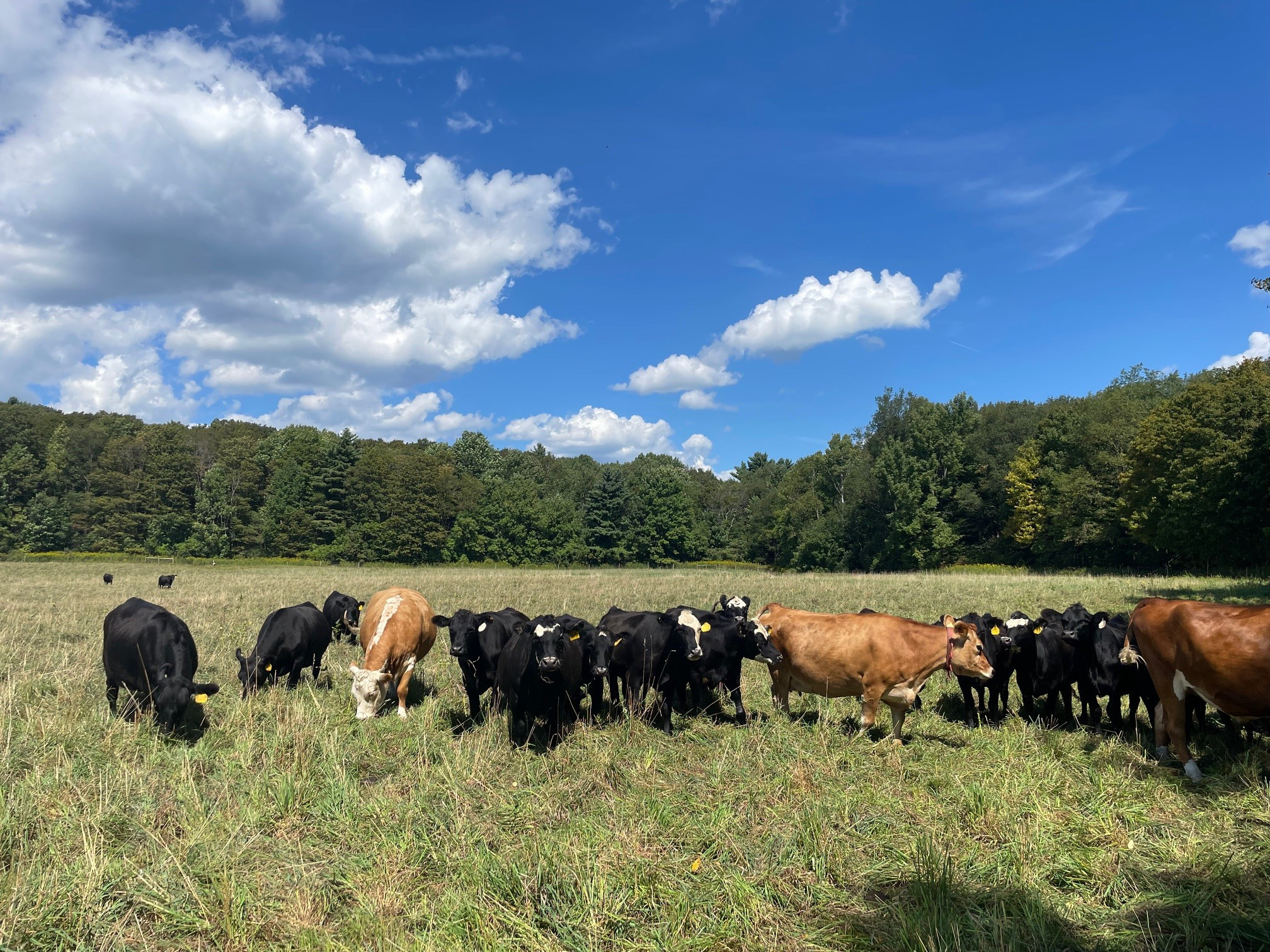
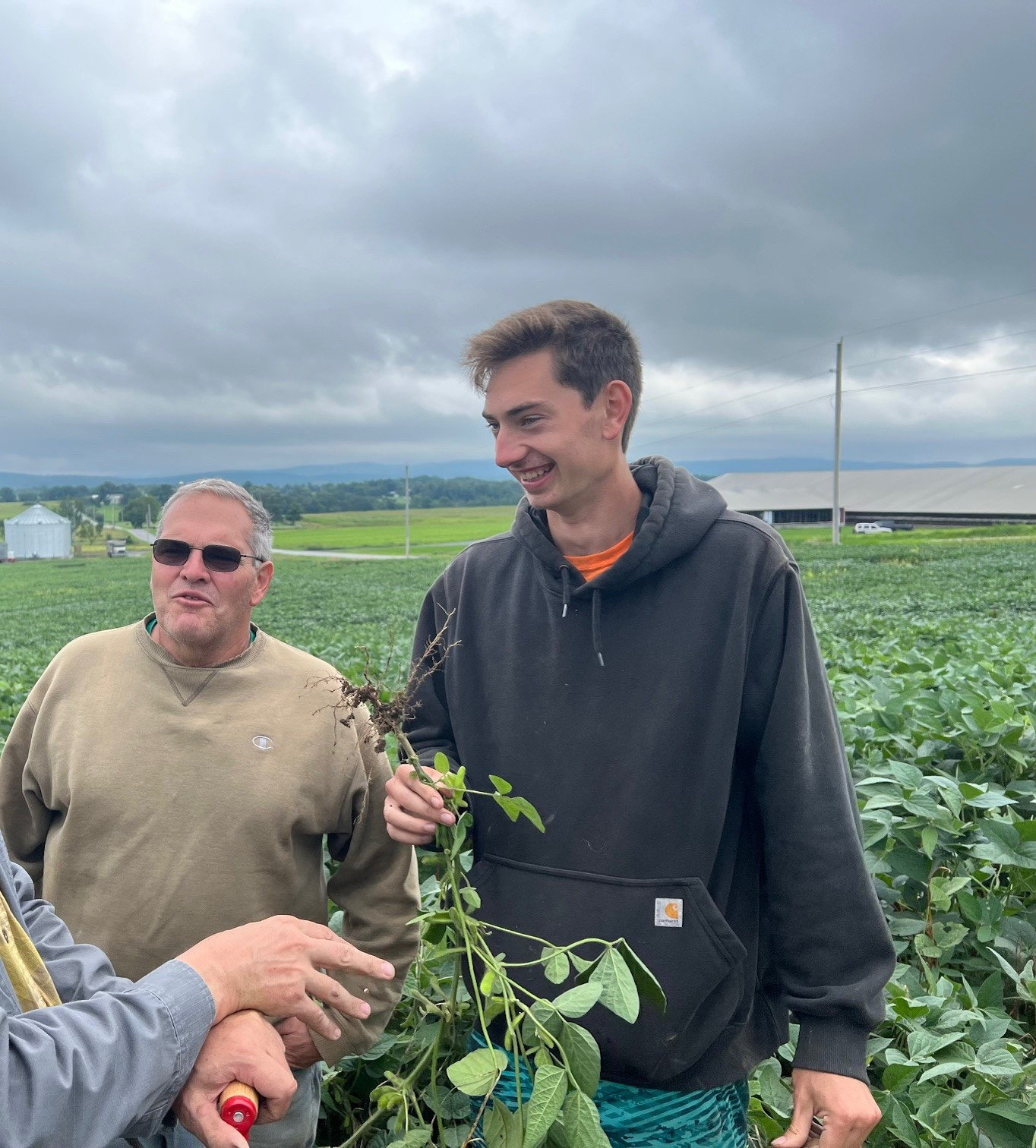
Meeting on farms was a defining feature. Farmers emphasized that this matters more than classroom-style workshops. Seeing how someone else moves cattle, renovates pastures, lays out lanes, or manages wet spots creates a type of insight that is hard to replicate through presentations.
It also led to productive questioning—why one farmer seeded a field a certain way, or why they structured their paddocks as they did. That led to new ideas and rethinking assumptions. As Scott said:
“There have been things I’ve done differently that I wouldn’t have thought of without their eyes on it.”

The Role of the Facilitator
Farmers were clear that the facilitator’s role was central to the cohort’s success. They highlighted several features of effective facilitation – consistency, strong listening skills, technical knowledge, an ability to guide discussions without taking over, and tone-setting interpersonal skills.
This is an important takeaway for future replication of the cohort model. Facilitation is more than a logistical necessity. A strong facilitator has a direct impact on the dynamics and the usefulness of the group.
Business Planning and Family Communication
While grazing and forage management were major themes, the cohort also worked through business planning tools. Farmers developed or revisited mission statements, clarified roles on their teams, and built skills for talking through decisions with family members.
One of the clearest examples of impact came from Caleb, who said his 11 year-old daughter used the cohort’s flip-chart tools to run a family meeting about purchasing more cows. It showed how practical the tools were—and how they extended beyond the group.
These kinds of skills are often overlooked but can be as important as management decisions in building long-term farm viability.

What Farmers Gained
Farmers consistently described gaining practical ideas they could test on their farms, along with the problem-solving support that comes from talking through decisions with peers who understand the work. Meeting regularly also helped them build a clearer sense of how and why other Vermont farmers manage the way they do, which in turn increased their confidence to try new approaches at home. Several noted that the cohort strengthened their sense of connection during difficult seasons and provided tools that improved communication at home and on the farm, especially during family or team discussions about next steps.
Brad Thomas of Thomas Dairy summarized it simply:
“Cheryl always had great meetings with great speakers where you could learn something and apply it to your operation.”
And Caleb said what many echoed in different words:
“It’s been a huge positive influence in my life and my farming career.”
A Model Worth Continuing
The initial two-year pilot was extended because farmers wanted more time together. They applied for additional funding and continued meeting for five years. If funding becomes available, they will continue the initiative.
This speaks to something important: farmer-to-farmer learning works best when it is long-term, flexible, and farmer-led. One-off workshops can’t create the same depth of understanding or trust.
For anyone looking to replicate this model, the essential components are clear: Meet on farms, facilitate rather than dictate, keep the agenda flexible, invest in building trust, and commit for more than one year.
This cohort demonstrates that when farmers learn together in an environment shaped by their own priorities, the results are meaningful — not just in production or profitability, but in confidence, well-being, and community connection.