Skip to content

November 12th, 2026

by Jenna Farineau

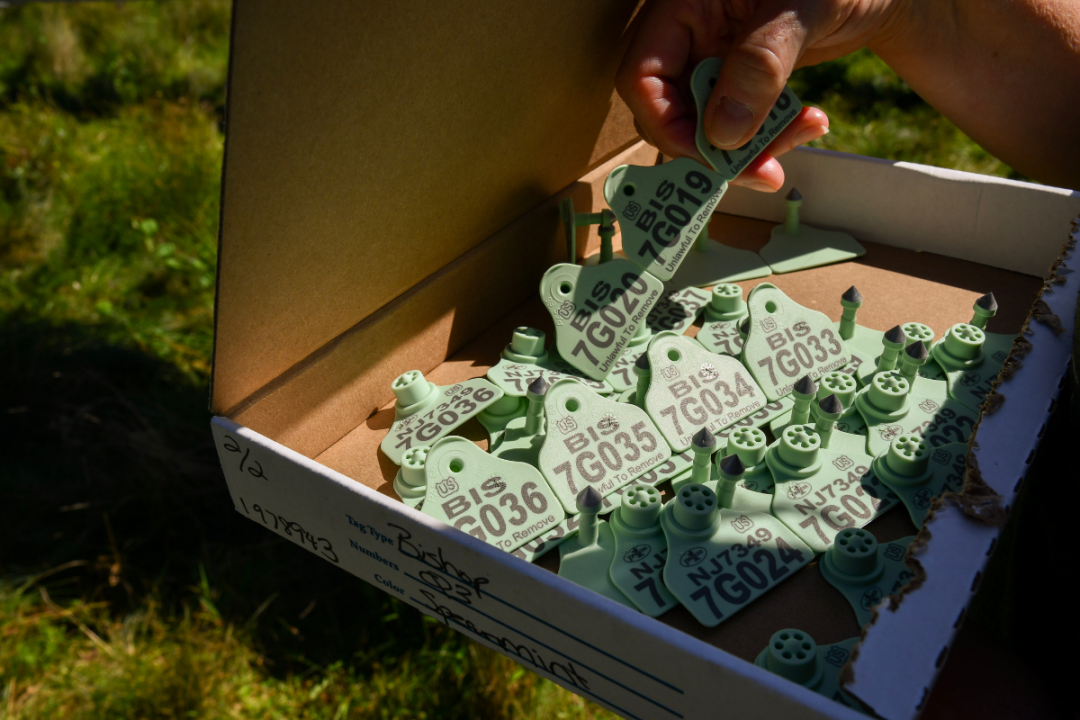
Julie Bishop carefully tags a newborn lamb, an important step in managing the health and care of her growing flock. Photo: Jenna Farineau.

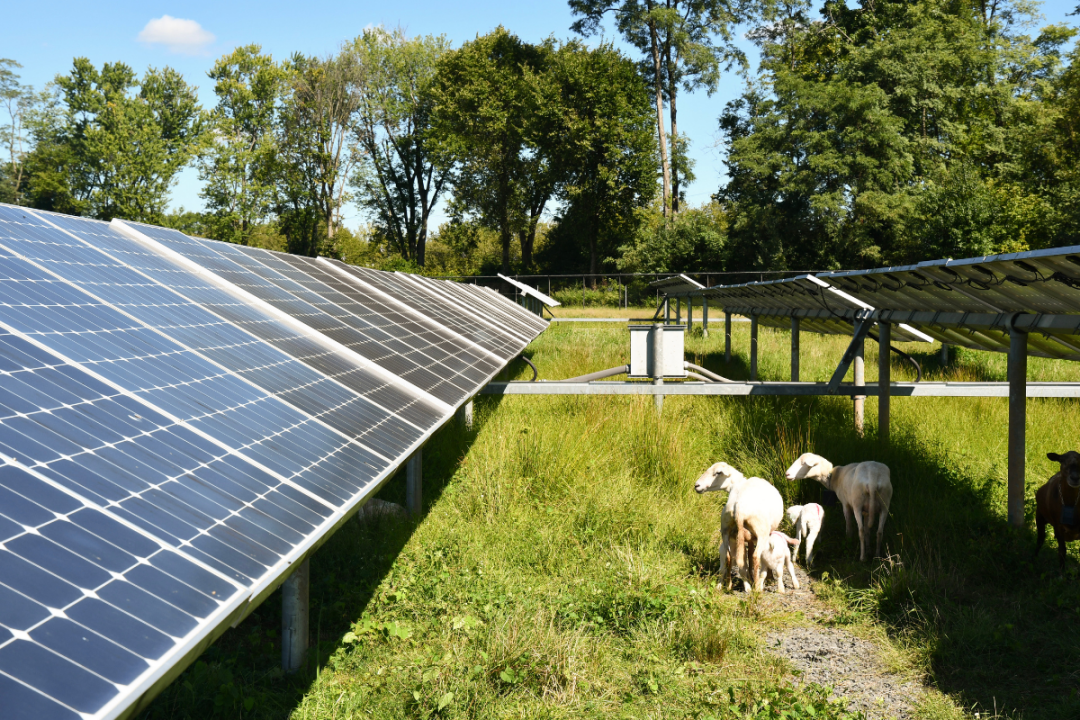
Julie Bishop was driving to her mother's house in southern New Jersey when something caught her eye. Behind the tall chain-link fence of a solar site, a crew was mowing the grass. 

"I'm like, that is a complete waste," she says. 

Julie had good reason to notice. Her husband gifted her an Australian cattle dog named Miss Mandy one Valentine's Day. To make the most of the dog's instincts, Julie signed up for herding lessons. But the lessons were in northern New Jersey, a long drive from home. So, she bought a few sheep to practice with on her six-acre farm. Then founded Solar Sheep LLC.  

"I decided I liked doing sheep more than I liked the horses," says Julie, who raised racehorses for years. Sheep also breed faster than horses. Before long, her flock had outgrown the farm. 

On a later trip past the solar site, she spotted a sign on the gate with an emergency phone number. She called it. 

"I said, 'Well, first off, there is no emergency,'" she recalls. Then she asked about grazing her sheep inside the fence. The man on the other end didn't hesitate. "He says, 'Where have you been? We've been looking!'" 

That was around 2011. At the time, few people in the U.S. had heard of solar grazing. Getting approval through the township took a while. Today, solar grazing is a growing industry, and Julie promotes it every chance she gets. 

The setup is simple; the concept proven 

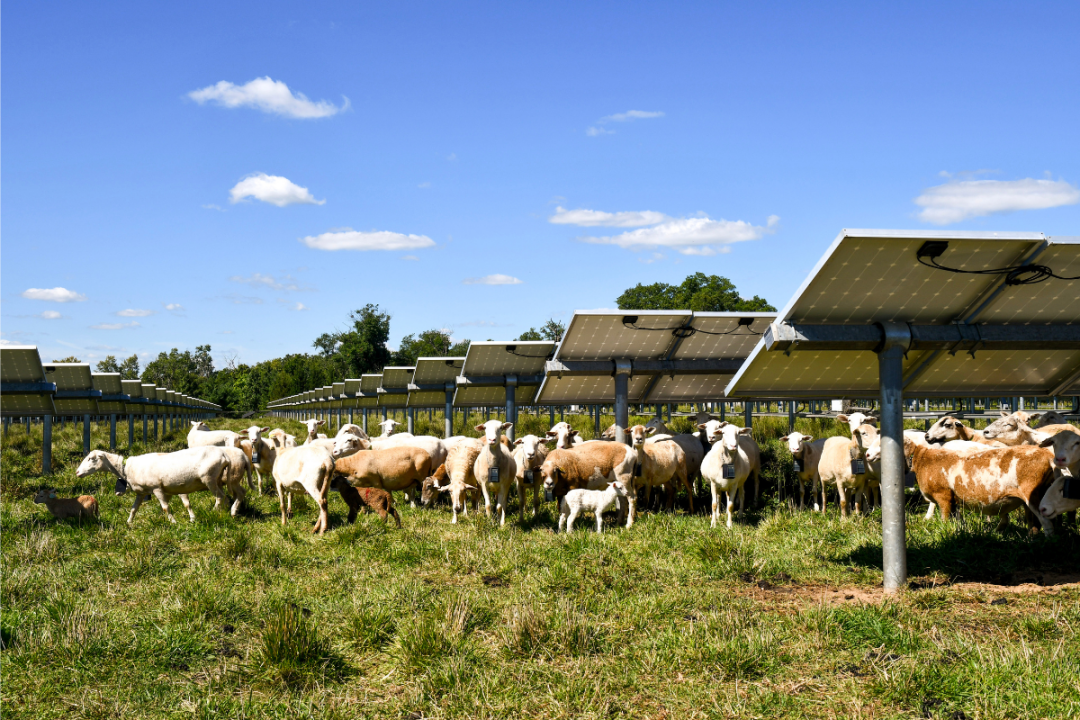
Sheep don't need special arrays. In Julie's experience, a typical solar site needs only minor changes during construction to work for grazing. Getting those details right upfront costs little. Fixing them later can cost more. 

Fencing is one example. Developers often attach fences to the outside of the posts because they look better. Julie says livestock fence belongs on the inside, facing the animals. "Then the stock don't push on the fence and pop the staples off," she explains. Coyote wire can then run on the other side of the same posts, with no extra posts needed. 

Ground cover is another. Every site needs something to hold the soil. Developers often pick low-growing plants to cut down on mowing. Julie suggests spending a little more on forage that sheep actually eat. "More is better...then you can feed more sheep," she says. 

Overall management matters. Julie rotates her sheep through sections of a site rather than leaving them in one place. By her estimate, that can produce about twice as much forage from the same ground. 

The sheep come out ahead, too. The panels give them steady shade on hot days. That's critical, because heat stress hurts reproduction, which limits how many lambs a shepherd can sell or keep to expand the flock. 

The arrangement works for everyone. Developers save on mowing; Julie gains land and income; and neighbors see working farmland that also produces energy. 
The economics pencil out  

Julie chose her breed with that in mind. She raises Katahdins, a hair sheep breed. They don't need shearing or tail docking, and they can breed year-round. Ewes are bred at about seven months old and average roughly 1.5 lambs each. A beef cow can take about five years to return an investment. "Where I can get income back within a year," Julie says. 

Julie, a former biology and math teacher, has run the numbers. Sell one lamb per ewe, keep the rest for replacement or expansion, and "you're golden." 

The market is there. In 2025, U.S. farmers and ranchers supplied only about 29% of the lamb Americans ate. Imports, mostly from Australia and New Zealand, made up the rest. And New Jersey sits close to some of the country's biggest lamb markets. 

"It's why New Jersey is so good at growing vegetables," Julie says. "We're not far from New York City, where all the people that are eating the vegetables are. That's where all the people live that are eating lamb, too." 

Keeping land in agriculture 

From Julie's perspective, one of solar grazing's biggest benefits is land access. Beginning farmers who can't afford to buy land can graze acres under and around solar panels they could never purchase. "It's a super opportunity," she says. 

It can help farm families, too. Some want to step back from farming, perhaps because their children have seen how hard it can be. Leasing land for solar offers steady income without selling to a developer. If it is designed to allow for both agriculture and solar energy production, the farmer gets paid for what they grow and for the lease. And unlike houses, solar panels can easily be removed. Julie imagines grandchildren deciding to farm someday: "We'll pluck out the solar panels and we're gonna go farm." 

Once land becomes a housing development, what are the chances it ever becomes farmland again? 

"Certainly not in your lifetime," Julie says. "Goose egg."

Julie Bishop explaining solar grazing. Photo: Jenna Farineau.

AFT's Farms Under Threat 2040 analysis projects that 83% of new solar development is projected to be sited on farmland. Julie sees every one of those acres as a chance to keep farming. "There shouldn't be a solar field — as long as it has adequate fence and water — that doesn't have sheep in it, if it doesn't have some other agriculture on it." 

Learn more about AFT's Smart Solar℠ work and explore the Smart Solar Toolkit from AFT's Farmland Information Center. 

Reach out to the team!

Photo of Catie Field

Catie Field

Smart Solar Program Specialist

Photo of Linda Garrett

Linda Garrett

New York & New Jersey Regional Director

Photo of Ethan Winter

Ethan Winter

National Smart Solar Director

Photo of Pieter Coetzee

Pieter Coetzee

Technical Specialist

About the Author

Jenna Farineau

Jenna Farineau

Writer/Editor

[email protected]

View Bio →

How can you help?

Get 10% off your first merch order

Follow Us