How Katie Swanson Adapts to Drought at Sweet Union Farm in Oregon
American Farmland Trust (AFT) is celebrating the 2026 International Year of the Woman Farmer, designated by the United Nations Food and Agriculture Organization (FAO). It is championed in the United States by the National Association of State Departments of Agriculture. This observance by 123 countries makes a global commitment to empowering and recognizing the many contributions of women in agriculture.

AFT programs utilize peer learning for farmers committed to advancing conservation, land stewardship, and community resilience in their communities. This Farmer Profile is funded by the Natural Resources Conservation Service to highlight inspiring farmers who work to protect, steward, and manage U.S. farmland.
High School Teacher Turned Farmer
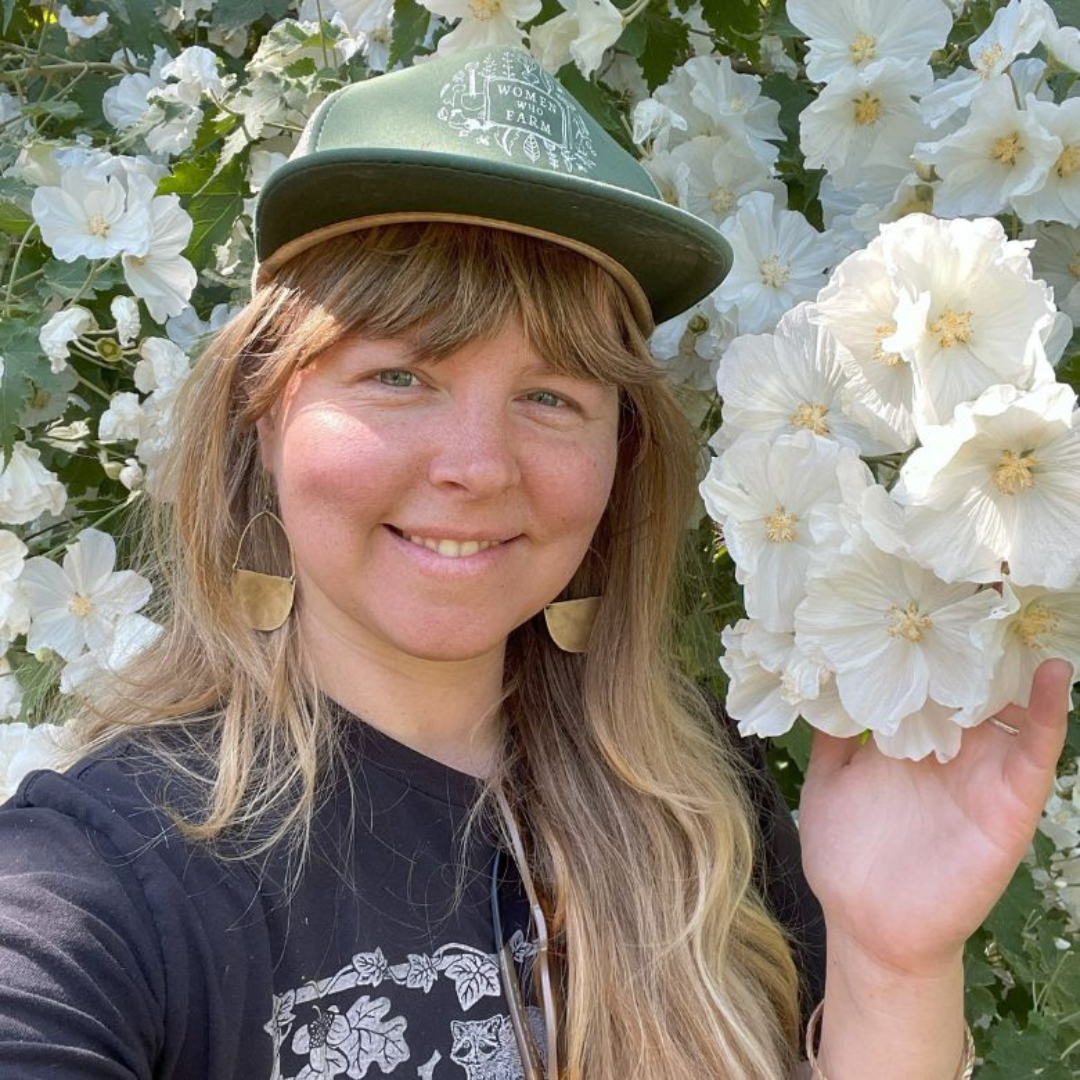
Katie Swanson was a teacher living in Portland, Oregon, and feeling burnt out with her career when she was inspired to join a farm apprenticeship on Sauvie Island during summer break. From her first day, she knew she had found her calling.
“It was literally my first day of farming, and I just cried. It resonated so deeply; it just felt so good to be there. I was so touched by the beauty and by how immediately happy I was. From then on, I knew that's what I wanted to do the rest of my life.”
Inspired by veteran farmer Laura Masterson’s presentation at Oregon State University’s Small Farms Conference the following winter, Katie spent a year at 47th Avenue Farm in Southeast Portland learning the foundations of diversified vegetable production and Community Supported Agriculture (CSA). Katie expressed pride in being a part of the ‘family tree’ of farmers trained under Laura.
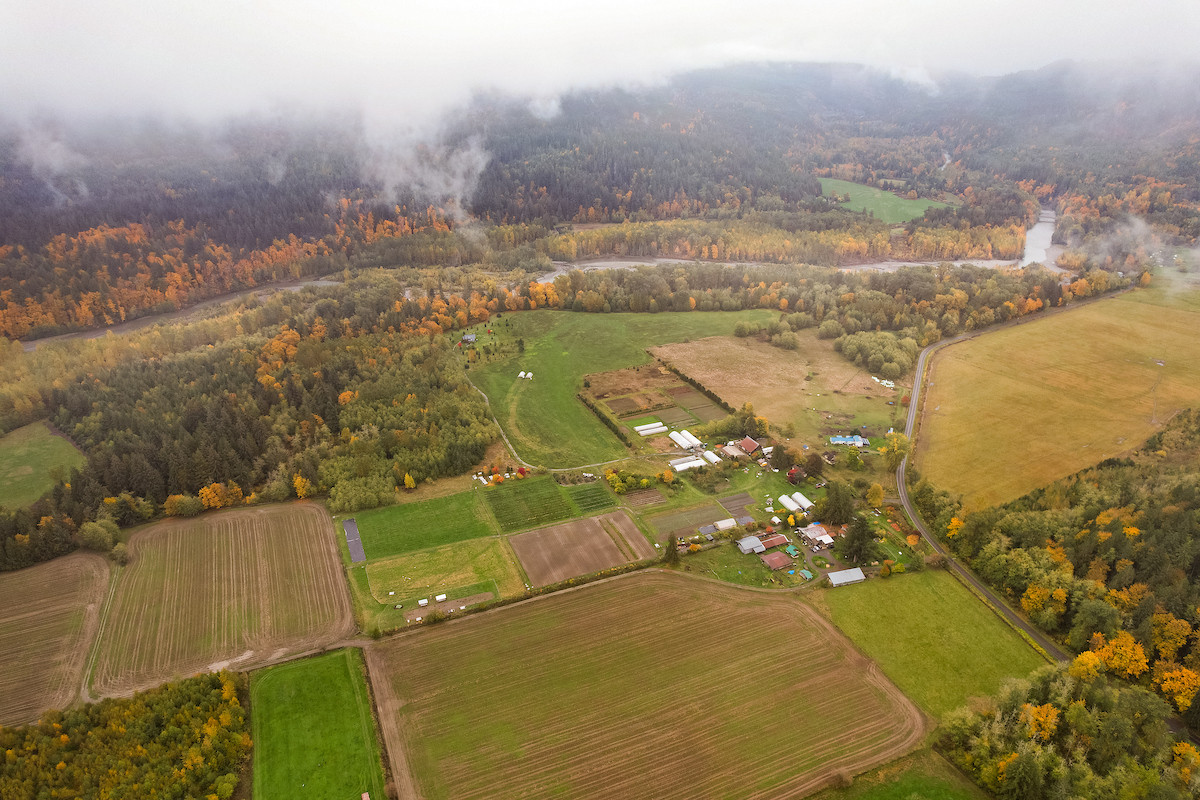
When Katie’s husband matched into a family medicine residency in Klamath Falls, the couple moved to Southern Oregon. Katie started Sweet Union Farm in her half-acre backyard in 2016 and quickly took over their neighbor’s half-acre backyard as well. Now at her dream property, she farms seven and a half acres on the Lost River.

Klamath Basin Irrigation and Water Resilience
Klamath Basin water issues have risen to become a national news topic over the past few decades. The Basin’s complex history involves a diverse group of water rights stakeholders that include the Yurok, Klamath, Karuk, and Hoopa Valley Tribes, farmers, fishermen, hydroelectric utilities, state and federal agencies, and environmental quantity protections for Suckerfish, Coho Salmon, and other endangered species. When Katie moved to her new farm, irrigation water was not available due to the complexities of the Klamath Basin Restoration Agreement and a prolonged drought. Without access, Katie urgently needed to rethink her farm’s water strategy and usage.
“It was the year where literally nobody in the Klamath Irrigation District got water. (…) It was wild. There was a lot of soul-searching happening. (…) I really started thinking it might not make sense to grow literally everything for a CSA.”
Strategizing for longer-term resilience, Katie invested in building an irrigation pond on their property to store water between inconsistent and increasingly infrequent water delivery dates. The Klamath Basin water shortages continue due to low snowpack, ongoing drought, and continued regulatory constraints. In 2026, the Klamath Water Users Association reported roughly half of the available water needed by local family farms and ranches.

Niche Markets: Growing Garlic, Salad Mixes, and Plant Starts
Katie quickly found that she couldn’t grow the same way that she was taught in the Willamette Valley. The arid, high-elevation valley and limited irrigation availability pushed her to analyze what she grows and why, and how to refine her business model as a one-woman farm. She began to focus on growing drought-tolerant and high-value crops, ultimately specializing in shelf-stable garlic and a high-demand wholesale salad mix.
Garlic was always a part of her crop plan. Over time, it became clear that its water needs fit within the available water windows, and it naturally hardens off (a process of drying down to cure) as water became scarce in mid-summer. Suddenly, garlic emerged as a Sweet Union Farm feature. To expand garlic sales and access new markets, Katie is in the process of getting the farm certified Organic. Katie is excited to continue expanding her garlic production in anticipation of a steady Organic market demand.
“I had a feeling it was going to be garlic. It's just a cool plant. I feel excited about the possibilities for it as a crop. (…) There's something so stable and self-sufficient about garlic.You know, once it's cured, it's good to go.”
After a farm intern shared their native plant expertise, Katie found a new passion for habitat restoration that set her on a native plant journey. Starting small, she began collecting native seeds and planting stock for a habitat buffer project with the Klamath Watershed Partnership on the Lost River. Reflecting on her values around biodiversity, she shared, “It’s important to me to create habitat for beneficials and birds and things like that.” It was a natural progression to add a native plant nursery sale with other farm products. The nursery project took on a life of its own. Katie slowly increased perennial varieties along with annual vegetables at her seasonal community plant sales.
“I like the specific role that only a vegetable farmer can play in a small community. It's very rewarding.”
Farmer-Led Research with WSARE
After much reflection, Katie realized that farming in Klamath Basin required further adaptation to thrive. Simplifying her production system, building organic matter, and mulching meant better soil moisture retention and less frequent watering. Curious to take it a step further, Katie began exploring how low- and no-till farming practices increase soil water-holding capacity.
As a direct result of ongoing water availability concerns, Katie took it upon herself in 2021 to apply for a Western Sustainable Agriculture Research Education (WSARE) grant to trial the on-farm efficacy of low/no-till practices on soil water-holding capacity with five small farms east of the Cascade Mountains in Oregon. As principal investigator, Katie asked whether low/no-till practices could improve plant-available water in beds between irrigation for growers in arid climates. Using water tension sensors (tensiometers), farmers measured the differences in plant-available water between beds prepared with and without tillage over one growing season with technical support from Maud Powell of Oregon State University Extension.
Through on-farm trialing, participants found that the no-till beds retained moisture best. Farmers reported that soil moisture sensors challenged their assumptions about early-season irrigation needs, revealing that moisture levels remained adequate between waterings. As a result, they adopted a more intentional, data-driven approach to irrigation instead of relying on routine watering schedules alone.

Forming the Western Arid Grower Network
Growing in an arid climate presents many challenges for producers. The growing season is shorter, and extreme temperature fluctuations stress tender crops. Without organic matter, native soil drains too fast, and wind evaporates the remaining moisture. If persistent drought wasn’t enough to tackle, traditional agricultural service providers have limited capacity in rural regions and often lack specific resources for arid, diverse vegetable production systems.
To find a viable path forward for her farm, Katie leaned on her peer community and commiserated with farmers facing familiar growing challenges, citing a need for new research. Katie’s frequent phone calls with Nella Mae Parks, who farms in the mountainous arid region of Cove, Oregon, became a lifeline. They discussed persistent production woes, mitigation strategies, and how to find best practices for small-scale vegetable farmers in challenging environments. Their cheerleading and camaraderie had “natural momentum.” Together, they applied for a WSARE grant and co-founded the Western Arid Grower Network in 2025 to facilitate on-farm research and develop a community of practice for ‘folks growing in arid places.’
“Nella May is an example of another female farmer that every time I talk to her, I learn a ton. We encourage each other and help each other feel better about things that make us feel crazy. We really support each other in a very specific way that only mixed vegetable female farmers can… We just want to build each other up.”

Towards a Collaborative Future
Katie Swanson’s grit, determination, and commitment to problem-solving are something she’s quick to deflect. She saw a problem on her farm and chose to create networks of support, build research, and develop markets to thrive, and ultimately made these challenges less intimidating for a broader community. Early on in her farming career, she compared herself to farmers with glossy success stories, but now she doesn’t aspire to someone else’s standard.
Instead, Katie shows us what’s possible when you build bridges, stay focused, and move toward practical solutions. A lot of her accomplishments were born out of necessity, reaching out to her farmer friends to problem-solve, and finding that collaboration and innovation were key to creating lasting viability.
"I didn’t set out to build any of those things. It was just ‘I have an idea. What’s a way to do that?’"
Inspired by Sweet Union Farm’s commitment to water resilience, peer networks, and farm viability? Be sure to sign up for our Pacific Northwest newsletter and follow us at @pnwfarmland to connect with stories, resources, and upcoming offerings.
Resources
USDA Natural Resources Conservation Service EQIP provides technical and financial assistance to agricultural producers to implement practices that address resource concerns.
o Find your local service center
AFT’s Western Water Resilience Collaborative
o Six case studies were developed as part of a broader initiative to support farmer-led innovation. The case studies share the process, tools, and resources that have been most helpful for producers exploring dry farming.