In My Garden: A Q&A with AFT’s Caro Roszell
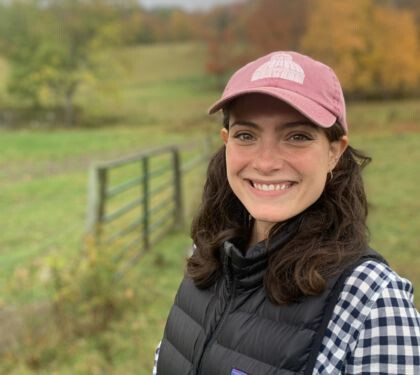
Caro is AFT New England’s Soil Health Program Manager, where she organizes farmer networks, provides technical support, and conducts research on agricultural practices and soil health. From New England perennial gardens to peer learning spaces, her work is rooted in connection — to land, farmers, and community. Read on to learn what she’s planting this spring and the farm lessons that continue to shape her work.

What was your first farming job, and what’s one lesson from it that still guides you today?
The summer before my senior year in college, I was academically burned out, preparing to write my senior thesis, and I just felt I needed a nice, long mental rest before taking up this task. I found an internship on a 3-acre market garden on the Olympic Peninsula in northwest Washington, packed a backpack, hopped a plane and a couple of ferries, and found myself on a farm for the first time in my life. I discovered the depth to which a person can become interconnected to a web of life when actively participating in an agroecosystem. I went there seeking a few months’ rest and respite from what I assumed was a future in academia and left there a farmer.
What's a seasonal ingredient or harvest moment that you wait for all year - and what do you do with it?
I would have to say strawberries. After years of running a market garden on my land (while simultaneously working for a farming non-profit and several other farmers), I've been converting it into a food-producing landscape. I collected daughters from the strawberry plants at other farms where I worked and planted them amongst other veggies, herbs, and flowers. I’ve allowed them to naturalize across my landscape and now only thin them when they begin to crowd out other plants. I do zero maintenance on them of any kind, and they produce abundantly every year. The only thing I have to do is cover select patches with row cover or fencing at ripening, to keep away robins, chickens, and chipmunks. Although, the reality is that there are plenty to share! During strawberry season, I take a walk each day with a colander, fill it, eat some fresh, and freeze the rest.
If you could design your dream farm (real or completely impractical), what would you grow or raise and why?
My dream farm was a no-till market garden operable by one person, because I'm an introvert and struggle with the intensely social nature of farming with a crew. I tried that for a few years, but in the end, it wouldn't pencil without scaling up and hiring, so I leaned into the non-profit side of my work, and now I'm creating my dream New England garden. It's low-maintenance, biodiverse, wild, and successional. I grow dozens of perennial fruit varieties, various perennial vegetables and nuts. I’ve also cultivated a "crop seed bank" of self-sowing annual vegetables, while leaving space for plenty of plants that support wildlife, add beauty, or both.

What's your variety/breed allegiance (tomato, sheep, chicken, cow, whatever you're passionate about) and will you defend it?
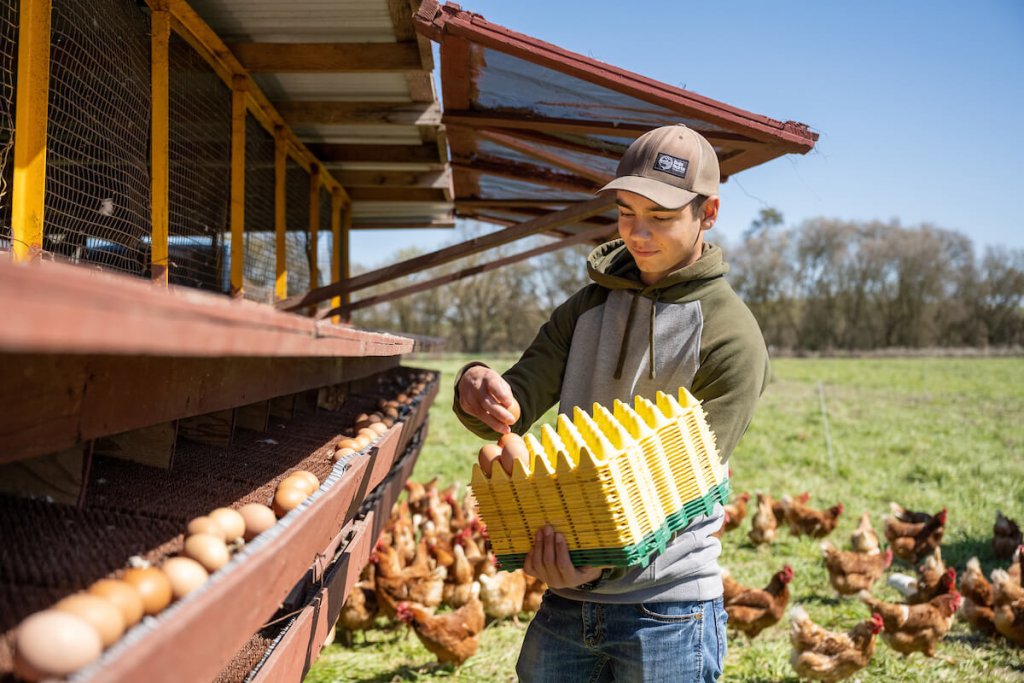
I received two silkie bantam hens from my best farmer friend since she has a commercial farm and they weren't practical for her. I thought they would be a cute, dopey, ornamental, and unproductive addition to my flock — purely a fun factor. And while they are cute and a little dopey, they have absolutely thrived and are the most reliable layers of my mixed flock. They lay all winter long, have the fewest health issues, and one of them routinely leaves the flock to follow me around the garden every evening in summer, companionably scratching nearby as I putter around. They do require bathing and drying indoors if they get muddy or wet in the colder months — their feathers aren't able to shed water and they can die of hypothermia — but that little bit of extra work is worth it for these birds, who are tough and productive in every other way.

In the plant world, I have fallen in love with sea kale (Crambe maritima). It takes a while to establish, but once it does, it's a rock star. I'm spreading it far and wide in the garden because, ornamentally, it has beautiful, fleshy, blue-grey leaves that create good foliage contrast next to finer and more warm-green colored foliage and flowers. It thrives in my poor sandy soils — in fact, it's called sea kale because sailors would plant it at sea ports so they'd have a reliable source of green vegetables on their maritime stops. It was domesticated in salty, sandy, windy places and it's early, delicious, and it seems completely resilient to pests in my garden. Who wouldn't want maintenance-free, early, perennial kale?

What's a moment when you felt like you really understood why this work matters - or a moment when you weren't sure?
From the Northeast Organic Farming Association to AFT, I've spent my career facilitating peer learning spaces to accelerate the spread of practical conservation and soil health knowledge. I've seen firsthand the way that peer knowledge can spread, slowly, on its own — but given the investment of structure, facilitation, outreach, and engagement by farmer-support organizations, it can dramatically accelerate. I really credit farmer support organizations like NOFA, AFT, and others with building the agricultural soil health movement by finding innovative farmers and working with them to spread the message faster and farther.
What’s something you’re planting — literally or figuratively — this spring? (Could be a garden, a project, a relationship, an idea, etc.)
This spring, I'm rethinking our approach to farmer soil health management planning cohorts — so look out for soil health management planning 2.0 from AFT. In the garden, I'm killing off the English cool season grasses that were planted over my septic leach field, and establishing a native meadow with bluestem, switchgrass, pale coneflower, lupine, milkweed, and fox sedge. In addition to the switchgrass (Panicum virgatum) I'm planting in the meadow garden, I'm planting a couple of other patches of it here and there, in part to produce more biomass to dry for chicken coop bedding. I'm always looking for ways to close the loop on inputs and increase nutrient cycling within my small parcel of land. My chicken manure is my primary fertilizer, and right now it's mostly mixed with bought-in pine shavings and straw. If I could produce more of my own coop bedding, that would increase the sustainability of my little agroecosystem.
~~~
This is the first in a new series highlighting members of AFT New England’s staff: the farmers, researchers, and organizers working alongside producers across the region. By putting faces to the work, we hope to share more about the people supporting resilient farms and thriving agricultural communities throughout New England.
.jpg)