At American Farmland Trust, our mission is to save the land that sustains us. In the Midwest, that work includes protecting farmland, supporting farmers, improving soil health, and helping reduce erosion and nutrient loss. A lot of that work starts with knowing the soil better.
An in-field soil health assessment is a practical first step. We look at things like compaction, residue breakdown, aggregate stability, rooting, pore space, and signs of biological activity. Why? Because knowledge is power to adapt and decide what type of action needs to start or stop to reach the field’s goals. In some cases, field observations are paired with lab testing for additional information. Taken together, those pieces give a clearer picture of how the soil is functioning.
For example, if crop residue is not breaking down well, that can point to questions about organic matter and soil life. Field testing tools like a penetrometer can be used to measure resistance at a certain depth, that may help identify compaction or a possible tillage layer. If water is not moving into the soil the way it should, that tells us something too. Each observation helps narrow down what might be happening and what to consider next.
That same practical approach is part of Farmer-Led Advances in Soil Health, otherwise known as FLASH. FLASH groups in Illinois are organized around priority watersheds and are led by farmers. First, a priority watershed is determined through the Illinois Nutrient Loss Reduction Strategy, then it is categorized by the greatest capacity to reduce high volumes of nutrient losses annually. The goal is to improve soil health and water quality in ways that fit local fields, local conditions, and local decision-making.
That farmer-led structure matters. Farmers learn a lot from seeing what is working for other farmers nearby. FLASH creates space for peer-to-peer learning, demonstrations, conservation planning, and financial support for practices like cover crops, reduced tillage, nutrient management, and other soil health approaches.
For farmers in FLASH areas, AFT is offering free soil health assessments as a starting point. The assessment can help identify resource concerns, show where more information may be needed, and help connect field conditions to possible management options. It is a way to begin with what is actually happening in the soil. The soil health assessment also includes a complimentary soil health test, which includes results for physical, chemical, and biological indicators of the soil.
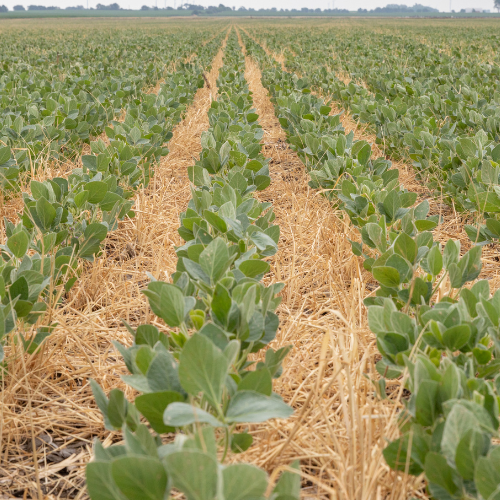
What has been noticed anecdotally during the last year of soil health assessments is that tillage can negatively impact soil health due to the disintegration of soil aggregates (think clumps) that contain the factors needed for biological habitat. This habitat is necessary for a lot of the processes that reinforce and promote healthy soil like nutrient cycling or water infiltration.
When soil is functioning well, it can help water move into the ground, reduce runoff, hold nutrients where crops can use them, and support stronger root growth. Over time, those improvements can help farms handle wet or dry weather conditions more effectively.
Those field-level changes also matter beyond the field's edge. Reduced erosion and nutrient loss can support water quality by keeping nutrients in the field rather than in the watersheds. Empowering our FLASH groups to accurately implement these, and other conservation practices, across identified priority watersheds can be powerful in creating more resilient soils. Resilient soils create more resilient farms and farmers, and when farms and watersheds are stronger, communities, wildlife, and the larger ecosystems benefit as well.
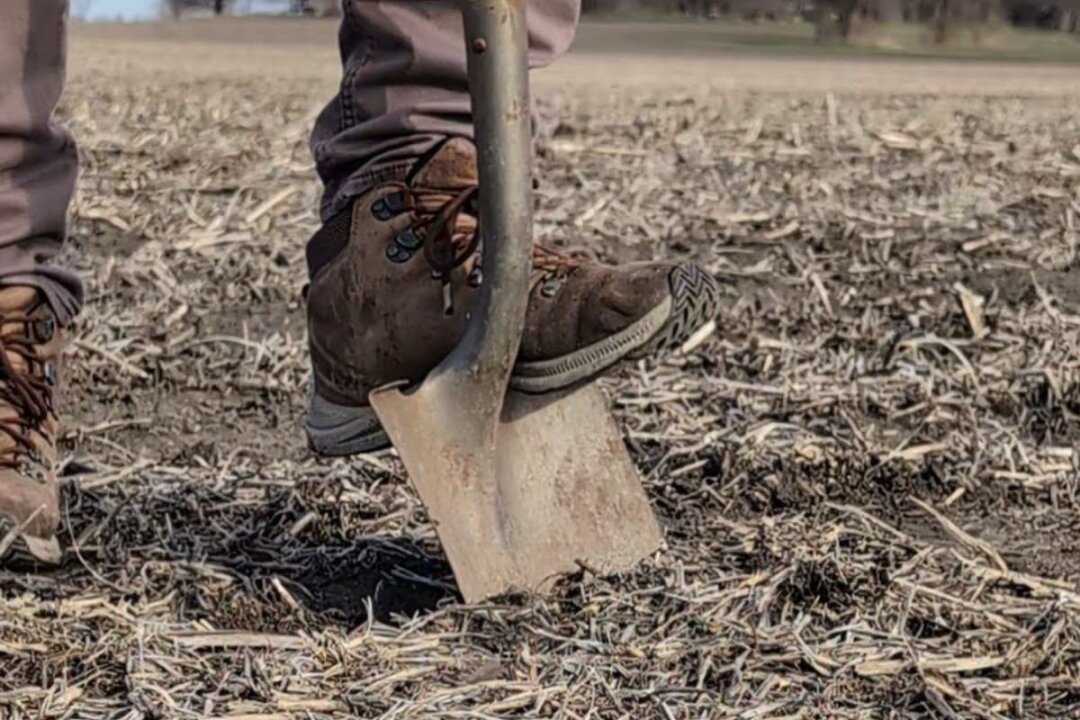
My encouragement to farmers is simple: start by getting to know your soil. Dig a hole. Look at its structure, roots, pores, residue, color, smell, and how water infiltrates. Compare a cropped field to a fencerow or another less-disturbed area. Use what you see to ask better questions.
A soil health assessment will not answer every question, but it can help point a farmer in the right direction. It gives us a place to start, a better understanding of the resource concerns, and a way to think through practices that work alongside the soil. That is good for the farm, good for water quality, and good for the communities that depend on both.
Interested in requesting a free soil health assessment and in a current FLASH group area? Contact Casey Kula at [email protected]
Not a part of a FLASH group yet and interested in starting one in your area? Click here to complete the FLASH Group interest form!


.jpg)
.jpg)
.jpg)
.jpg)