Rooted in Community: Jennifer Viktora-Cuomo with Wonder Farm Earth in Illinois
In Part Two of Rooted in Community, we hear from Jennifer Viktora-Cuomo, the owner of Wonder Farm Earth in Wonder Lake, Illinois. Jen focuses on practices that preserve the farm for future generations, local connections, and a commitment to addressing food insecurity in her community.
In Spring 2026, the Midwest team hosted a second Learning Circle at Wonder Farm Earth. Our discussion ranged from strategies to boost water conservation on the farm to current climate-related risks in farming.

Can you share the history of your farm and what led you to this work?
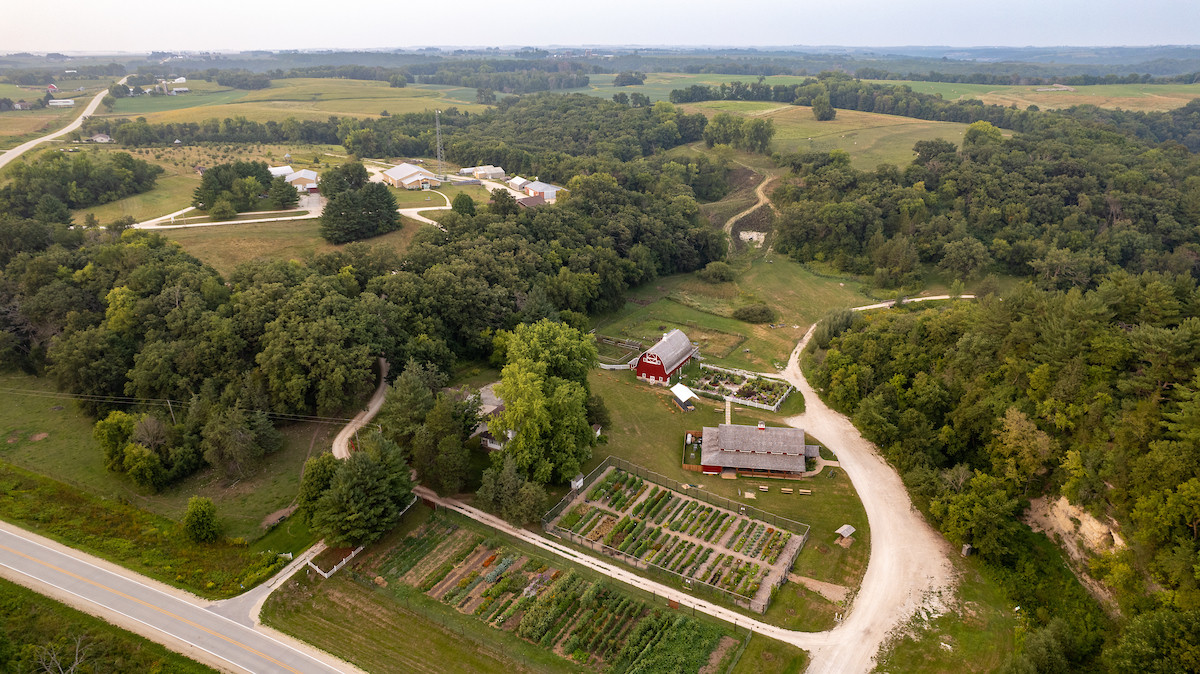
During the COVID lockdown, my husband and I wanted more space. We lived on a wooded, quarter-acre, suburban lot, and though this was bigger than our previous home in Chicago, it was too small. Inspired by the local farmers market, I wanted more space to sell produce and value-added products at the local farmers market.
After nearly a year of searching, we found a house with seven acres and lots of opportunities. Suddenly, we had ample space, but no agricultural background, and I had no idea where to start. I enrolled in the Stateline Farm Beginnings program offered by Farmers Rising. Through the program, I defined my farm goals, the steps to achieve them, and I found my focus:
A commitment to addressing food insecurity and participation in programs like the Farmers’ Market Nutrition Program (FMNP) and Special Supplemental Nutrition Program for Women, Infants & Children (WIC).
I knew that while farming equipment may expedite tasks, heavy equipment could harm the farm's health. I intended to operate as a manually powered farm, prioritizing reduced emissions, avoiding overtaxing our water table, and enhancing our farm biome.
Our land will outlive us, so we must do our part to preserve it for future generations by prioritizing earth-friendly practices.
How has your identity been shaped by your relationship to farming?
It took me time to feel comfortable introducing myself as an Illinois farmer. I was a stay-at-home mom, and motherhood was a large part of my identity. In a way, I’m mothering my land in addition to my children. As I saw my efforts take shape, I grew more confident in my new vocation. During every session of the Stateline Farm Beginnings program, we introduced ourselves and our farms. Over time, I refined my pitch and grew confident in acknowledging myself as a farmer.

As we look toward the future of agriculture, what kind of food system do you hope to see?
I would like to see a shift away from the reliance on industrial agriculture. Instead, I hope to see a movement toward regenerative agriculture, with a focus on community-centered food systems. This emphasizes the importance of conservation and feeding local communities rather than prioritizing mass production for global distribution.
Realistically, this shift is not the current prevailing trend in agriculture. Many programs that support farmers in conservation practices have been significantly reduced or removed altogether. Farming is inherently physical and time-consuming, so it’s easy to understand why labor-saving farming implements and industrial agriculture dominate agriculture today.
I do not have the luxury of investing in expensive equipment, nor do I produce on a scale that could feed the world. Instead, I maintain close relationships with those who visit my booth at the farmer’s market.
Participating in my community is essential to me, both as a farmer and in other roles. I have been an active participant at the same market, and I recently received a Farmers Market Manager Certification from the Illinois Farmers Market Association to help the market grow further.
After joining the Climate Adaptation and Mitigation Fellowship, Women & Nonbinary Cohort for Small Fruit and Vegetable Producers, I’ve implemented practices such as building rainwater catchment systems, investing in battery-powered farm implements, and selecting edible perennials over annuals.
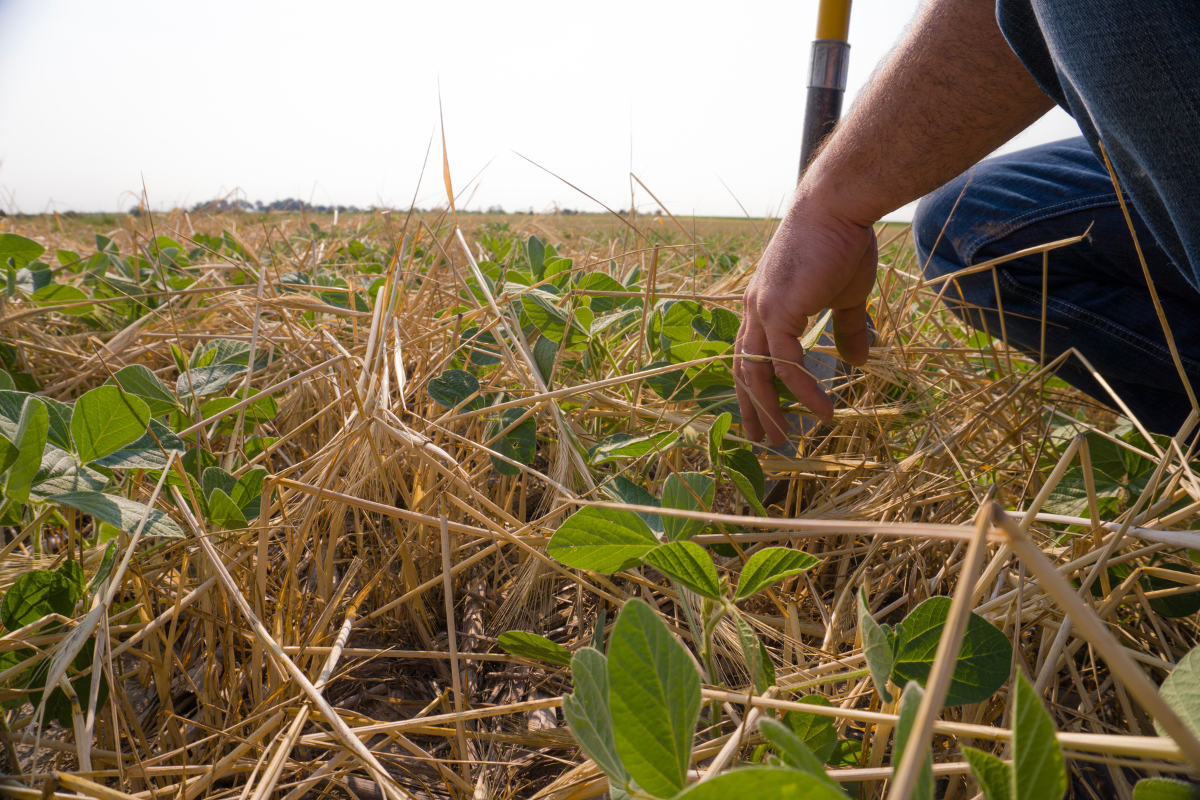
Embracing the philosophy to use what we have, I turn fallen trees—brought down by adverse weather patterns linked to climate change into hügelkulturs. A practice that uses wood debris to create nutrient-rich growing beds. This year is the first time I have not tilled, opting to intensively tarp and occasionally use a broadfork.

What advice would you offer to beginning farmers who are just starting their journey?
One of the best pieces of advice I received was that farming is dirty and rarely perfect. Just plant the tree or begin the garden plot. Perfection isn't necessary, and your initial idea may evolve, so stay adaptable.
Additionally, you don't have to tackle everything on your own. Engage with other growers, attend field days, lectures, and more. Don't hesitate to seek knowledge and embrace mistakes as part of the learning process. Remember, what works for someone else might not be applicable to your practices.

What is bringing you hope right now?
The community I’ve built is a great source of inspiration. It’s a joy to witness customers' children grow and to hear from those I may not see during the winter months. I offer plant starts before my produce is ready for harvest, so it’s uplifting to hear when a customer enjoyed my peppers so much last season that they want to grow their own. While I may lose a future pepper sale, I can follow up on their progress and share what new items I have that week.
Within the agricultural community, I am delighted to watch Illinois farmers thrive on social media. Social media isn’t always accurate; however, that doesn’t take away from being able to celebrate their wins. Outside of conferences and learning circles, social media is often the way I stay in contact with farmers and customers until we bump into each other again.
I participate in multiple food accessibility programs, and my interactions with those recipients are extremely motivating and hopeful. Those little wins keep me going and greatly reduce the impact of a slow market or crop failure.
A donation to our work in the Midwest further amplifies Midwest farmer voices. You may also consider showing your support by becoming an AFT member at www.farmland.org/membership.