How Agrivoltaics and Solar Grazing Are Creating New Opportunities for Texas Farmers
Standing in a field in rural Tennessee for the dedication of Silicon Ranch’s Christiana Solar Farm, what struck me wasn’t the cattle grazing beneath the panels, but the intention behind the design. Too often, agriculture is added to solar sites as an afterthought. Christiana was different.

Silicon Ranch, a leading independent power producer that develops, owns, and operates utility-scale solar energy generation sites, is embracing livestock grazing partnerships and workforce programs to help producers build and scale agricultural operations. Their innovative model highlights how solar development, when intentionally designed with agriculture and soil health in mind, can support energy production while creating new pathways for land access, agricultural production, and rural economic opportunity.
Reflecting on the experimental integration of cattle into the Christiana project and the growing enthusiasm around this concept has me thinking about how we could integrate solar and farming in the Lone Star State. Texas now leads the nation in utility-scale solar capacity. Solar energy generation in Texas has quadrupled between 2021 and 2025. At the same time, the threats to farmland due to housing and urban encroachment are accelerating. Texas working-land prices surged more than 500% between 1997 and 2022, with most of that increase happening since 2017. Beginning farmers and ranchers face the steepest land-access barriers in a generation, reducing producers’ ability to expand their operations and aspiring farmers or ranchers to enter the sector. These pressures are compounded by the aging agricultural producer base in Texas, where the average age in 2022 was nearly 60 years old.
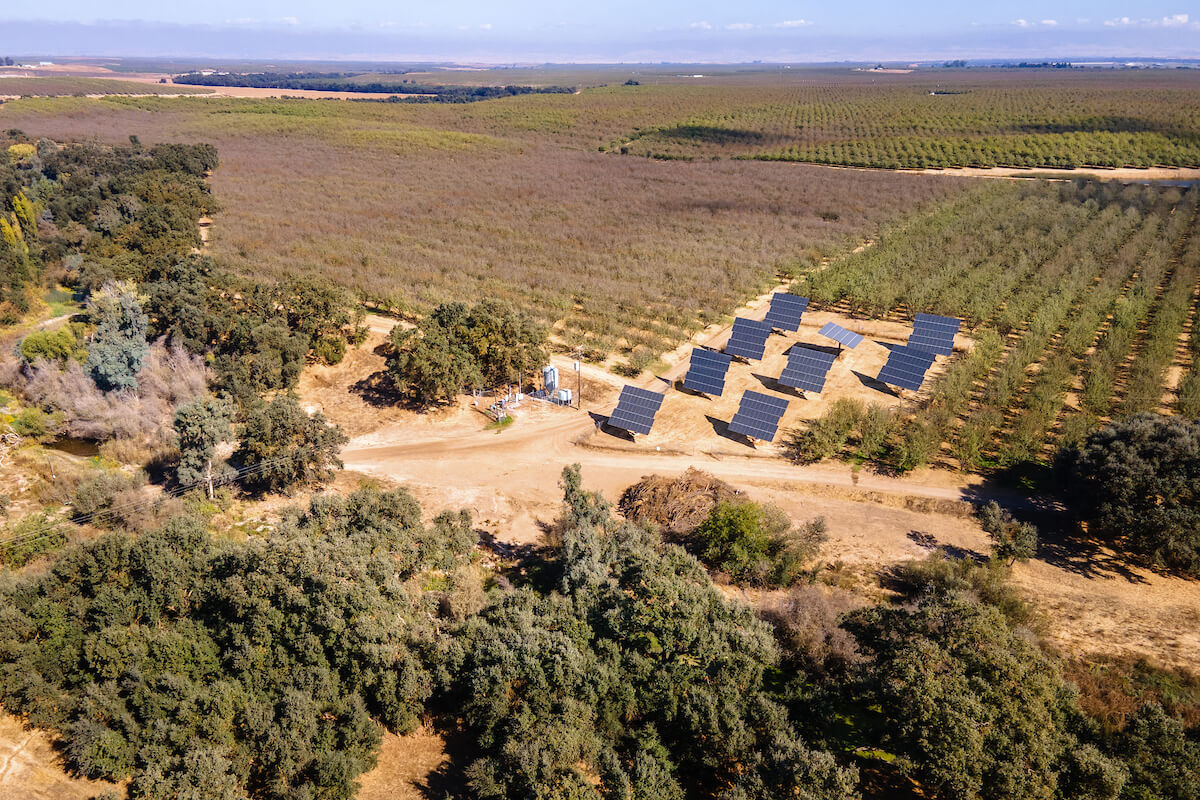
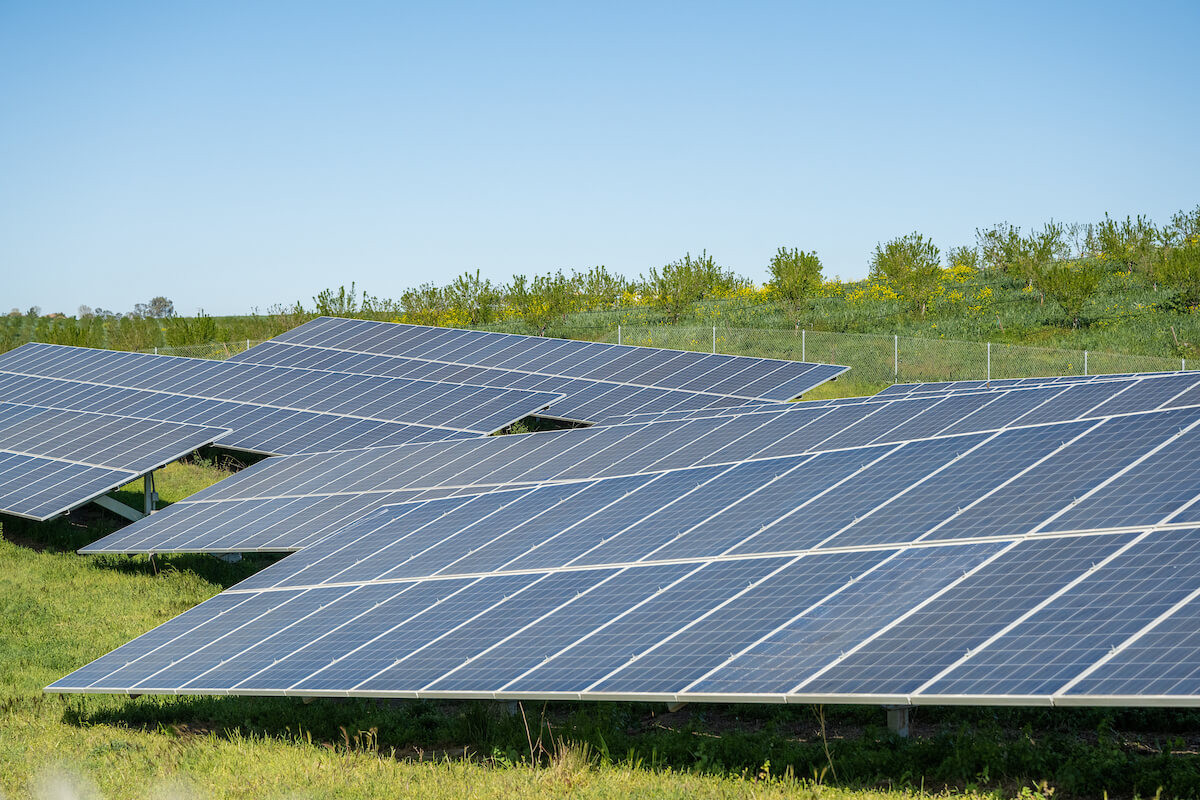
While solar development and agriculture are often seen as competing for the same acres, compelling opportunities are emerging in which agriculture is designed into solar projects from the start rather than treated as an afterthought, creating an opportunity for win-win solutions. Agrivoltaics, the intentional integration of solar energy and agricultural production on the same land, offers a solution that AFT is working to advance.

A New Path to Working Land
For some producers, agrivoltaics isn’t just supplemental income. It’s becoming a way to gain access to acreage and build new solar-based agricultural enterprises that might not otherwise be feasible. With solar sites requiring ongoing vegetation management to prevent shading of panels, solar grazing, typically with sheep, is increasingly the preferred solution. Through grazing contracts, solar graziers get paid for providing a service while growing their flock and business operation. A growing network of Texas farmers and ranchers are leading the way:
Ely Valdez, who started solar grazing in 2015 with a couple dozen sheep, now oversees a flock of over 10,000 and operates on 40,000 acres across several states. According to the American Solar Grazing Association’s 2024 census, solar grazing covered more than 68,000 acres in Texas, a number that has no doubt grown alongside continued solar development.
JR Howard, the 2025 Solar Rancher of the Year, has scaled his operation into one of the largest Texas solar grazing companies in the country. In addition to grazing tens of thousands of acres with sheep, last year he cut nearly 3,200 bales of hay on Texas solar sites and expects to double that in 2026.
Bradford Quigley, a 26-year Army veteran working in solar grazing, sees room for far more — bees, broilers, sheep, hay, and other enterprises stacked on the same site. “I view solar grazing as the single biggest opportunity for new farmers, ranchers, and military veterans to get into agriculture,” he told me. “So many people could make a living off one property.”
Research suggests sheep grazing on solar sites can provide more stable returns than traditional agriculture by combining livestock production with grazing service revenue. Many producers see agrivoltaics as a major opportunity to reinvigorate the domestic sheep industry, given that over 70% of lamb consumed in the U.S. is imported.
Beyond economics, these agrivoltaic systems also offer environmental benefits. Studies show that solar panel shading reduces heat stress in livestock and helps retain soil moisture, critical in drought-prone states like Texas.
If agrivoltaics becomes the norm rather than the exception, the impact could extend beyond millions in annual lease payments and local tax revenue that large scale solar projects provide. Importantly, agrivoltaic projects would create vital new entry points into agriculture and expand access to working land for producers otherwise priced out.

Designing Solar for Agriculture
The “cattle-voltaics” ribbon-cutting in Tennessee was a milestone and hopefully, the beginning of a larger shift. The question is no longer whether solar is coming, but whether projects will be planned to directly support agriculture or create opportunities for agricultural production and land access alongside energy generation.
Agrivoltaics will not solve the land-access challenge on its own. However, projects intentionally designed for agricultural production can create new entry points for farmers and ranchers at a moment when access to land remains one of agriculture’s greatest barriers.
With more than 230,000 farms and ranches and the most utility-scale solar of any state, Texas can decide what the next chapter of working lands looks like. That decision happens one project, one lease, and one conversation at a time.
In late 2024, AFT surveyed nearly 200 farmers, ranchers, and landowners about Texas solar development. While nearly half supported solar on agricultural land, most said they lacked trusted, agriculture-centered information about leasing and agrivoltaics.
Our Texas Smart Solar Survey report outlines recommendations, including training agricultural and conservation professionals on solar integration. That work is continuing through our Sustainable Agriculture Research and Education (SARE) agrivoltaics training program in partnership with the American Solar Grazing Association and Texas producers. Contact Garrett to learn more.
If you are interested in learning more about AFT’s fee-based solar consulting services for developers, landowners, and local agencies, please also check out Prosperity Partners.