Farm Succession Planning: How to Get Started
Alex Morency is helping New York farmers plan for the future of their land.

New York farmers are aging, and questions loom about who will take over family operations. When combined with real estate development pressures, which threaten to reshape agricultural landscapes, these issues are causing concern among rural communities and food system advocates.
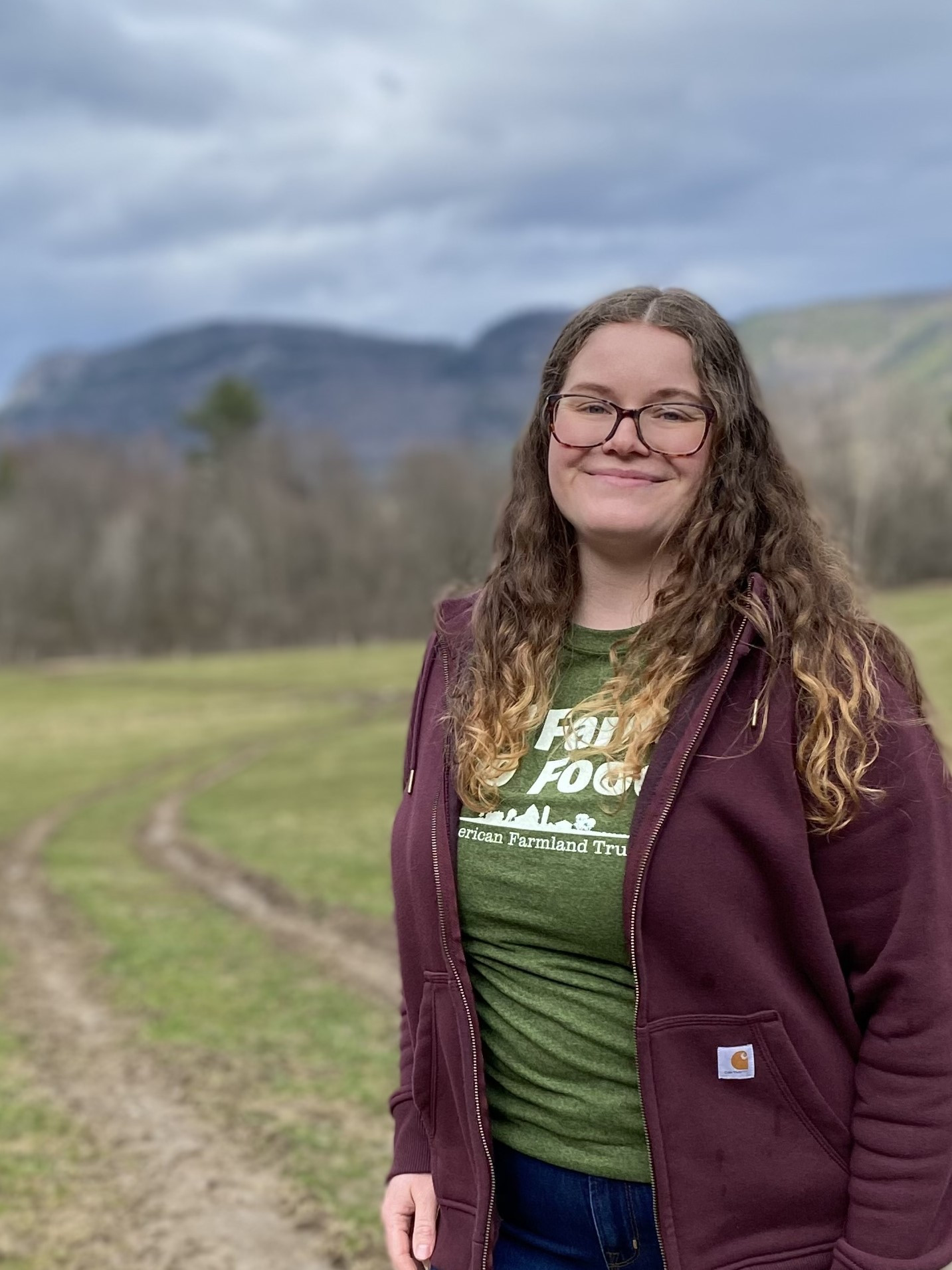
Alex Morency, the Farmland for a New Generation New York Associate at American Farmland Trust (AFT), is doing her part to help farmers persevere. Through the Land Transfer Navigators project, she offers succession planning workshops, provides one-on-one guidance, and promotes proven tools to help farm families secure a future for their land. Her work is helping to ensure that agriculture remains an important element of New York’s culture and economy for years to come.
In this conversation with Brooks Lamb, AFT's former special advisor for strategic communications, Alex talks about the importance of farm succession planning, shares her personal experiences with the topic, and drops a little wisdom from Mark Twain.
Why Farm Succession Planning Matters
Brooks: There's so much we could talk about today, but I’m particularly interested in discussing generational farm transitions and succession planning. It sounds like this is a big issue in New York. Why is this topic important?
Alex: Farming is hard to get into, but it is also hard to get out of. We don’t talk enough about the challenges of transitioning out of agriculture. It can be a complex and highly emotional process, especially since these matters impact both your lifestyle and your livelihood.
In New York, transition planning will play a critical role in the future of our farmland. One third of our farmers are over 65, and it’s estimated they own and operate nearly two million acres of farmland, or about a third of all the agricultural acreage in our state. This land is at risk of being lost to farming when it changes hands, especially in cases where there is no clear transition plan in place. That’s because New York’s farmland is threatened. There is a high risk of farmland conversion to urban sprawl, low density rural development, and new development pressures like data centers and warehouses.
Without action to protect our farmland and keep it in the hands of farmers, we could lose roughly 500,000 acres in the next two decades, according to AFT’s Farms Under Threat 2040 research. That’s the equivalent of losing 2,500 farms, $288 million in farm output, and 7,200 jobs based on county averages. Proactive farm succession planning will keep more land in agriculture and give the next generation a better chance to farm.

Offering Support and Building a Network
Brooks: You’re involved with AFT’s Land Transfer Navigators (LTN) project, which is supported by the USDA Natural Resources Conservation Service. This nationwide effort tries to make generational land transitions easier for farm families. What are you and your team doing to help people through this process?
Alex: The Land Transfer Navigator program has complimented the work our team was already doing in New York. I help farmers through our regional Farmland for a New Generation New York program and manage the New York Farmland Finder website, which has helped nearly 250 farmers gain access to more than 11,000 acres of farmland since 2018. Land Transfer Navigators helps take this work even further by providing us with resources, training, and opportunity. Through the program, I have been able to work one-on-one with farmers, primarily those without identified successors, and have offered succession planning workshops. Recently, I presented a workshop called “Tools to Support Farm Transitions.” We had a great turnout – 58 farmers, farmland owners, and service providers showed up to learn together. I talked about different tools, like the amazing Farm Transfer Toolkit developed as part of the LTN project, that can address some of the common sticking points that come up in the transition process.
The program has also helped us connect with other service providers. The NY Land Transfer Forums convene professionals like appraisers, lawyers, business and financial consultants, and more who all play valuable roles in a farm transition. During these forums, attendees connect with and learn skills from one another that they can then use in their work. In two recent forums, Amber Russell from the New York State Agricultural Mediation Program trained us in communication skills like active listening, which will help service providers to be better facilitators in meetings with farmers and farm families.
Brooks: That’s fantastic. The workshop you described earlier sounds interesting. What stood out to you during or after this event?
Alex: During my workshops, I try to stress the importance of building your “support team.” In New York, we are lucky to have a robust network of service providers who all have tons of experience and a wide range of skills. These professionals can assist farmers through all stages of the succession process. It was really rewarding to speak with folks in my most recent workshop who were beginning to plan for the future but had some concerns. Maybe they didn’t have a successor identified, or they were very worried about their land being taken out of agriculture and converted to development. During and after the workshop, we were able to connect them with proven tools, like our New York Farmland Finder website, and local land trust partners who work on conservation easements. Before this event, they didn’t know about these resources, but now they do. That’s the power of a team approach.
Firsthand Experience
Brooks: I can tell that you’re passionate about this work. Why does it matter so much to you?
Alex: Protecting farmland and supporting transition planning are close to my heart. The county where I grew up, and still currently live, is consistently one of the top-producing dairy counties in the state. Growing up, I was surrounded by small, family-owned dairy farms, and many of my classmates—along with my fellow 4-H club members and FFA friends—were from dairy families. Sadly, what were once farm fields in my home community are now being slowly removed from agriculture for low density development. There is a field right down the road from my childhood home that was used for field crops when I was young. Now there are four houses in that field.
Transition planning also matters to me because I have gone through two family land transitions that were... Well, let me just say messy! Poor planning, lack of communication, and high and fraught emotions strained family relationships during the transition discussions. We were fortunate that even though we had to make a lot of compromises, we were still able to purchase my husband’s grandparents’ farmland. That keeps the land in the family, but more importantly, it keeps the land in active agriculture. Not all people and farms are so lucky.
Words of Wisdom
Brooks: Thanks for this conversation, Alex. Do you have any final thoughts to share?
Alex: Mark Twain is given credit for saying “the secret of getting ahead is getting started.” I’m not as wise as Mark Twain, but I will add to that sentiment by saying that the time to start is now. Transition planning might feel like a daunting task, but chipping away at it now will only set you up for success in the future. The good thing about plans is they can change—and it is a lot easier to make changes to an existing plan than it is to start one from scratch when it’s too late.
Please join Alex and the Farmland for a New Generation team on October 22, 2026 for a special panel discussion; Our Farms Our Future Farm Transitions Stories Panel
Are you a farmer who would like to learn more about succession planning? Or are you an agricultural advisor who might like to engage in this work? If so, check out the following link or call the Farmland Information Center at (800) 370-4879 to learn more: https://farmland.org/newyork-land-transfer-navigators