How Severy Farm Invests in Resilient, Grass-Fed Dairy
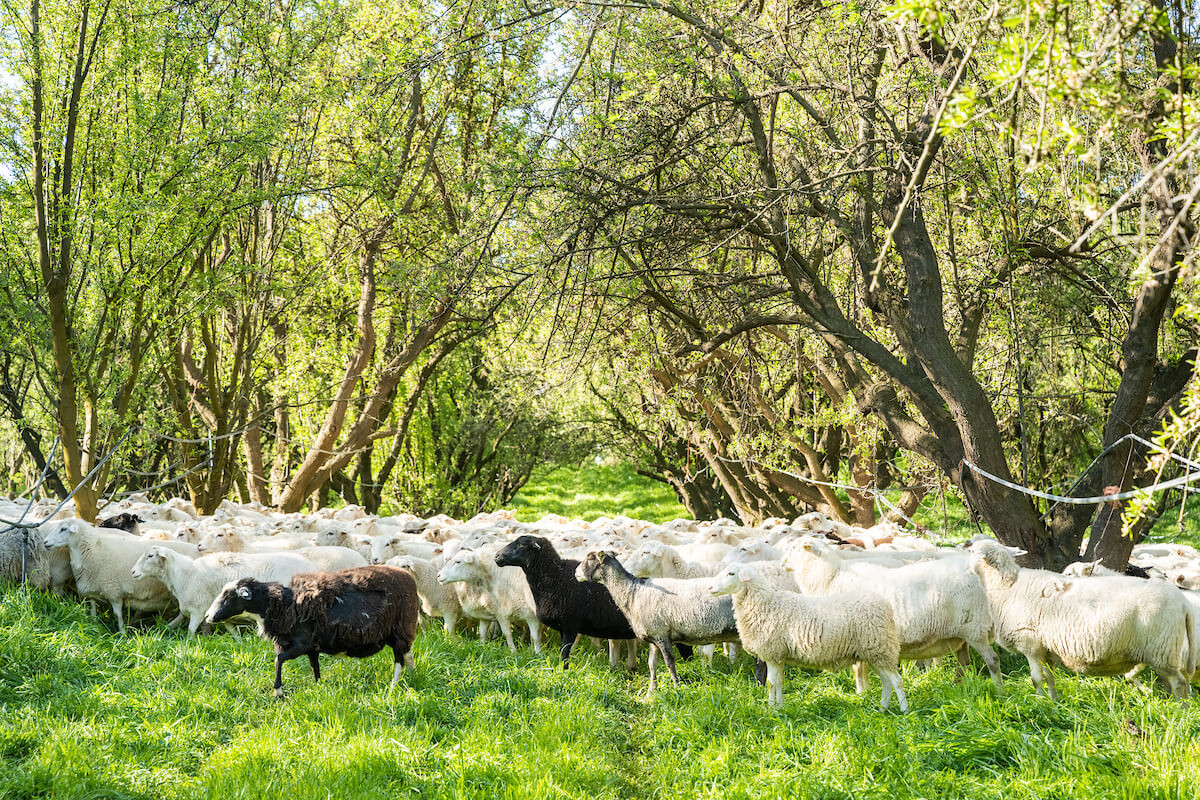
Joseph Severy was just 20 years old when he founded Severy Farm in 1975 in Cornwall, Vermont. He soon began integrating grazing into his operation and transitioned from growing corn to feeding a mix of hay, haylage, and alfalfa silage. The natural transition towards grazing and a grass-based diet made it relatively easy to transition to a certified organic operation in 2006. The farm then further certified as a grass-fed operation in 2019, allowing them to sell into the Organic Valley Grassmilk line. This raised the farm’s required grass percentage from 30% (under regular organic) to 60% dry matter intake, increasing the importance of grazing management and producing and storing high-quality hay and baleage.
As the farm transitioned to grass-fed, Joe’s son Nate was completing his transition back to the farm. He had gone to college, married, worked for the Vermont Association of Conservation Districts, and then as an agronomist for the University of Vermont. During his time at UVM, he began working part-time on the family farm. By 2019, he returned full-time, and he and his family began the complex process of selling the farm from one generation to the next.
During this period of transition, Joe gave Nate ample space to experiment and to make the investments Nate saw as vital to the future of the farm. While Joe had operated the farm with staunch independence from outside sources of support, Nate was interested in making use of grants and federal funding sources to improve the farm’s infrastructure to reduce risk, increase resilience, and meet the multiple challenges of dairy farming in the 2020s: increased weather volatility and extremes, difficulty securing reliable labor, and market swings.
Addison County, where Severy Farm is located, has heavy clay soils and sits in the rain shadow of the Adirondacks. Despite wetter springs, winters, and falls, rising annual temperatures increase drought risk; precipitation has become heavier and more erratic, so summers often feature dry periods punctuated by storms too heavy for rainfall to fully infiltrate—leading to poor moisture utilization. This increases the need for irrigation on the farm, to ensure forage quality and yield is maintained in dry times, while also needing to invest in soil health, nutrient management, and water management to address the impact of heavy precipitation events on forages, stored feed, buildings, manure, high-traffic areas, and other infrastructure.
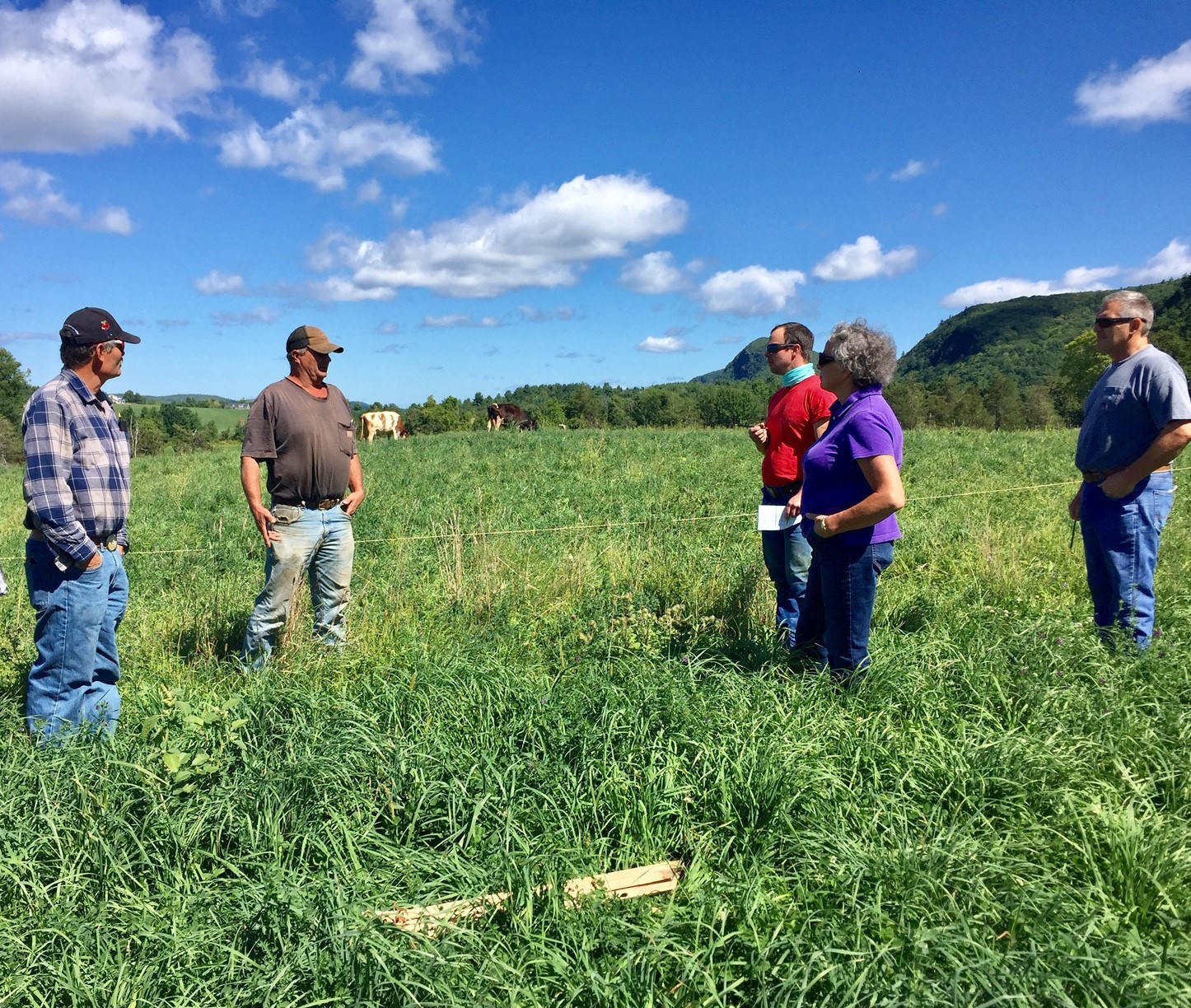
The farm’s gradual adoption of federal funding sources as a tool for strategic infrastructure upgrades began modestly in 2017 with a pipeline. Cheryl Bruce of UVM Extension visited the farm and saw that the watering system for the farm’s grazing dairy herd was rigged up with farmer ingenuity and a lot of garden hoses.
She worked with Joe and Nate to contract with NRCS for a water pipeline; EQIP funding helped to cover that $30,000 investment.
In 2019 and 2020, to meet the growing need for high-quality hay in their newly grass-fed certified operation, they invested in a covered feed alley to protect their dry hay. But increasingly unpredictable heavy precipitation events make dry hay harder to reliably produce, so the farm has also increased its production of baleage as an adaptation strategy. The covered feed alley and barnyard were improved to better manage the dry and wrapped bales; this was supported by a Vermont Housing & Conservation Board Business Enhancement Grant; an EQIP project to improve laneways to reduce wet-weather-related issues followed in 2021.
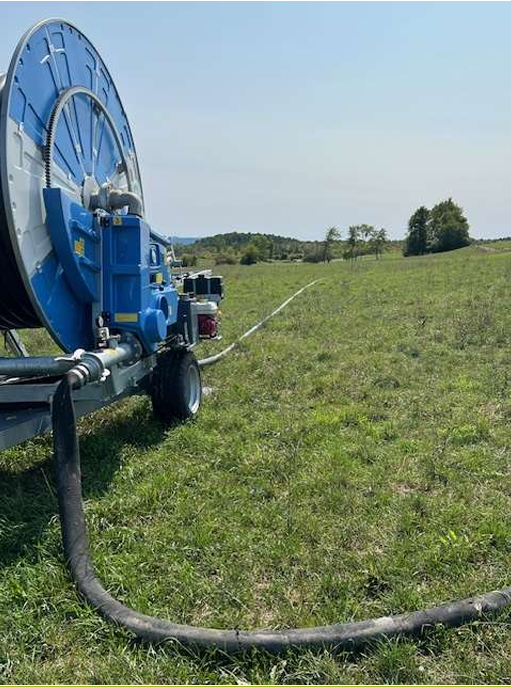
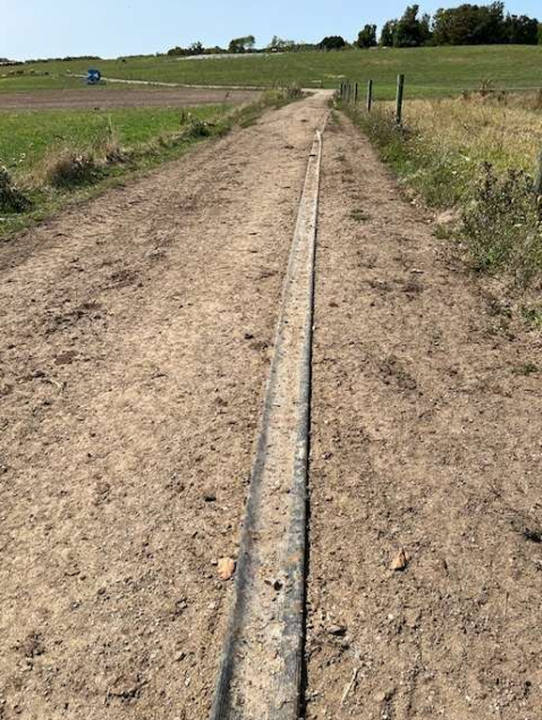
The farm produces dry manure, but leaching remains an issue, especially with increased heavy precipitation events. The farm installed a leachate pond in 2022 with support from the Vermont Agency of Agriculture, Food and Markets' Best Management Practices (BMP) Program using American Rescue Plan Act (ARPA) funding. It used Vermont Conservation Effects Assessment Project (CEAP) funds to help purchase a traveling gun in 2023 to irrigate forage crops in dry periods. An irrigation system design allowed for the gun to use the leachate from the pod to return nutrients to the fields. The farm plans to expand the use of the traveling gun irrigation reels to cover more acreage.