
AFT Applauds Introduction of the Bipartisan American Food Supply Chain Resiliency Act
American Farmland Trust (AFT) applauds Governor Kathy Hochul and the New York State Legislature for enacting a final FY 2026–27 state budget that delivers meaningful, sustained investments in farmland protection, farm viability, climate resilience, and local food systems across New York.
American Farmland Trust has named Julia Valliant as Director of the national Farms for a New Generation team, where she will lead efforts to increase access to land and capital for the rising generation of farmers and ranchers and support elder farmers and landowners in transferring their farms with dignity and confidence.
AFT Applauds Introduction of the Bipartisan American Food Supply Chain Resiliency Act
Highlighting a recent policy update that offers a perspective on our work to advance farmland protection and support agricultural viability across Washington State in 2026.
During the first year of the 2025–2026 California State Legislature, AFT led coalitions to advance California agriculture policy that strengthens climate resilience, expands land access, protects farmland, and secures major investments through Cap-and-Invest, the SALC program, and Proposition 4 climate-smart agriculture funding.
Chelsea Gazillo
As agriculture evolves, American Farmland Trust is scaling its programs, research, and regional teams to meet the needs of farmers and ranchers across the country. Learn how AFT’s new leadership structure and expanded national initiatives are driving innovation, resilience, and farmland protection.
David Haight
Virginia farmer Bob Waring is redefining agriculture by “growing fertilizer” through regenerative practices that boost soil health, resilience, and profits.
Elizabeth Beggins
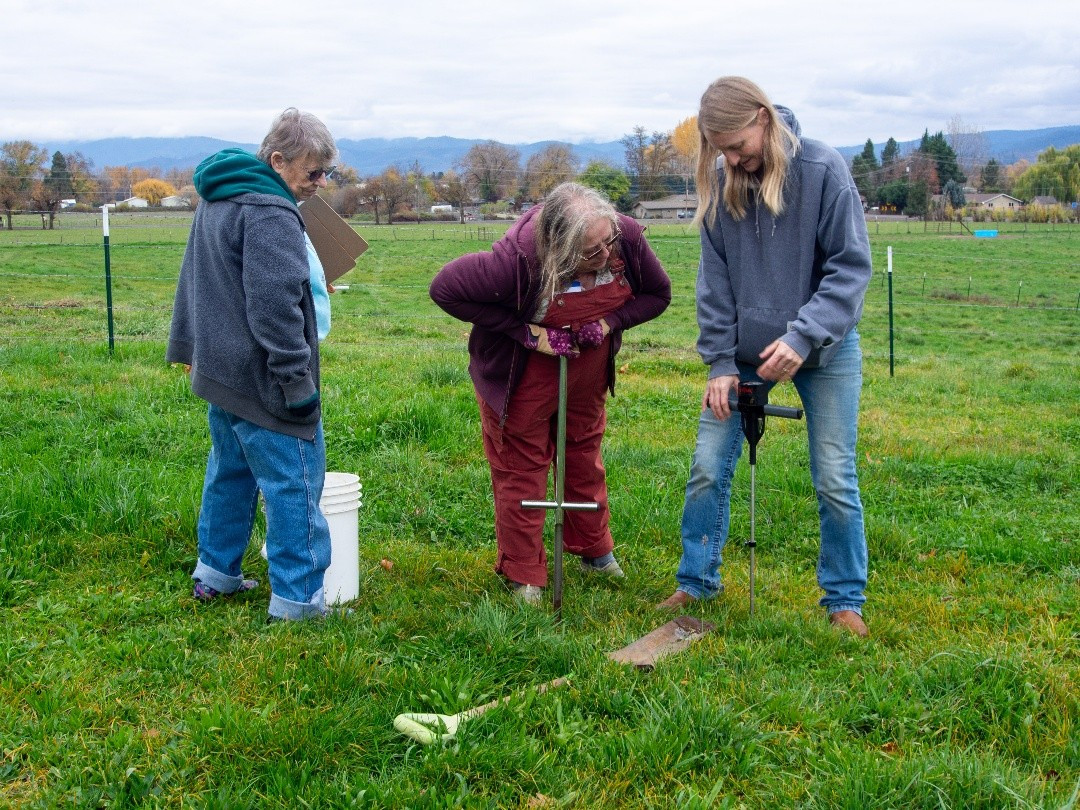
Five years ago, American Farmland Trust launched the Soil Health Stewards program with an ambitious idea: if we could train the people protecting farmland to also champion healthy soils, the benefits would ripple far beyond property lines.
When a late frost destroyed most of Scott Farm Orchard’s 2023 apple crop, orchardist Erin Robinson and manager Simon Renault turned loss into action. Through the Planning for Adaptation and Resilience to Climate Change (PARCC) project, they developed a climate plan focused on diversification, soil health, and community support. From frost fans to their best-selling ginger cider, Scott Farm shows what adaptation and resilience look like on the ground in Vermont.
Lia Raz
In this third installment of our blog series, we analyze the labels, marketing channels, and environmental markets the PCSC projects proposed to pursue to attract customers who value farm and forest climate-smart conservation practices.
Peter Ten Eyck was a pillar of the farming community in New York state, and a trailblazer for conservation and stewardship.
David Haight
Alan Bailey
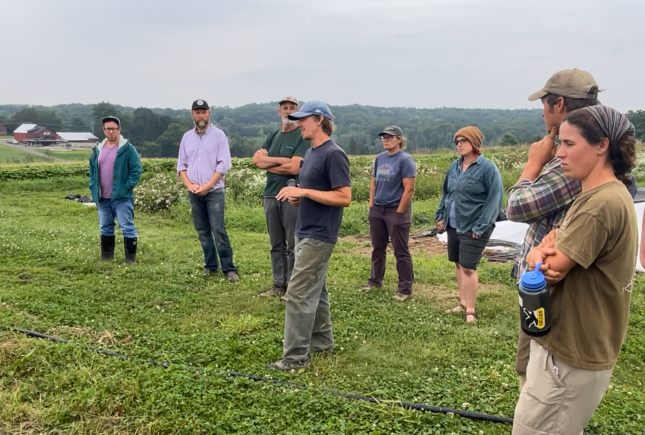
Organic farmers across New England are rethinking tillage. Through American Farmland Trust’s Farmer Led Innovations project, seven farms are testing new ways to build soil health, save time, and learn from each other’s successes and failures.
Lia Raz
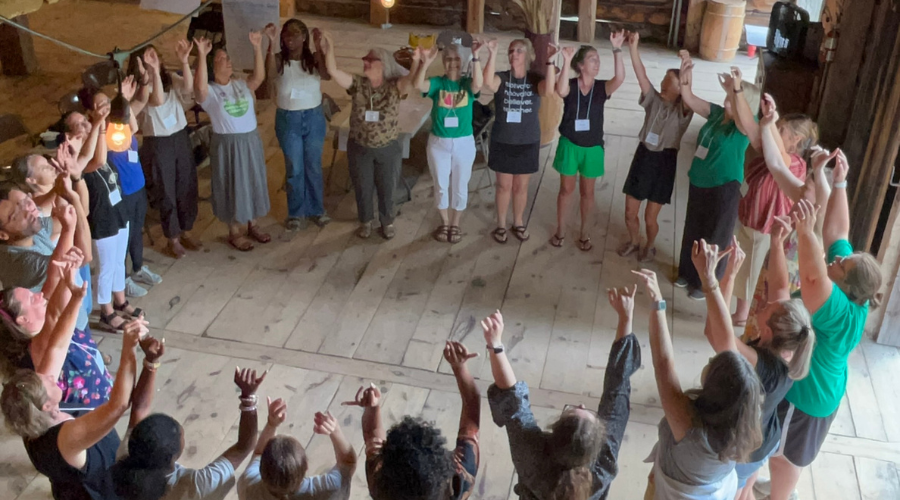
American Farmland Trust hosts the New York Farm to School Institute retreat for schools growing farm to school efforts.
Heidi Exline
Through AFT's Regenerative Agriculture & Soil Health Curriculum
Kinzie Reiss
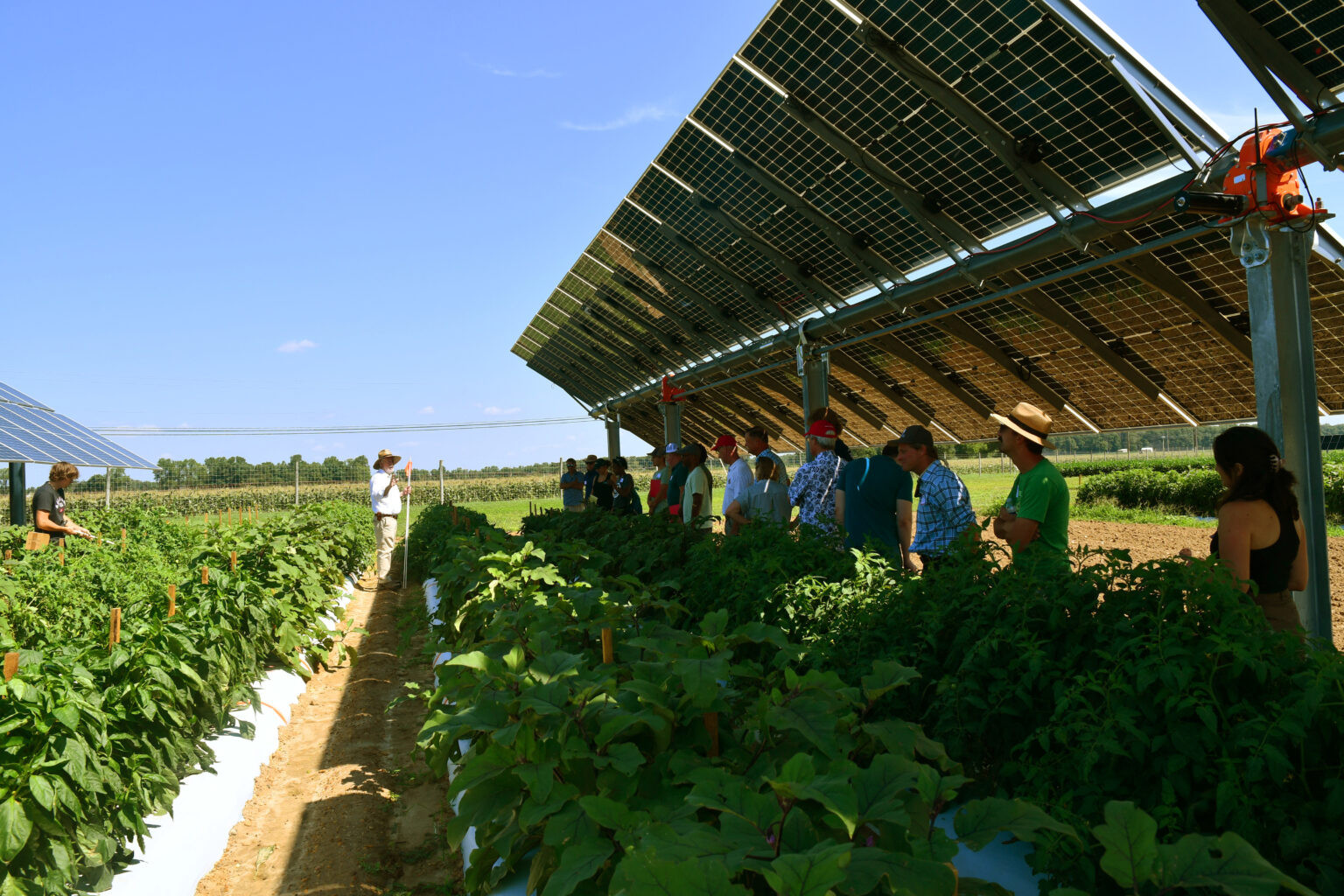
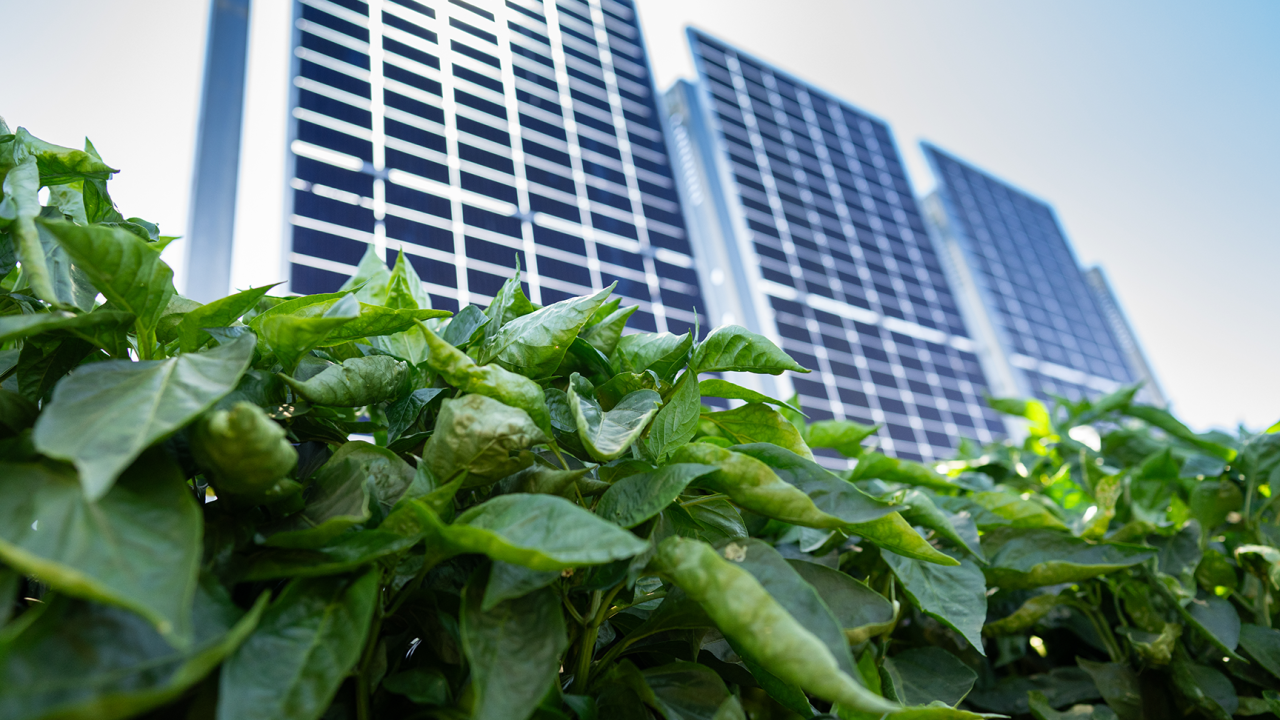
This fall, farmers across California are invited to attend four free events designed to explore how agrivoltaics can support working lands and strengthen farm resilience.
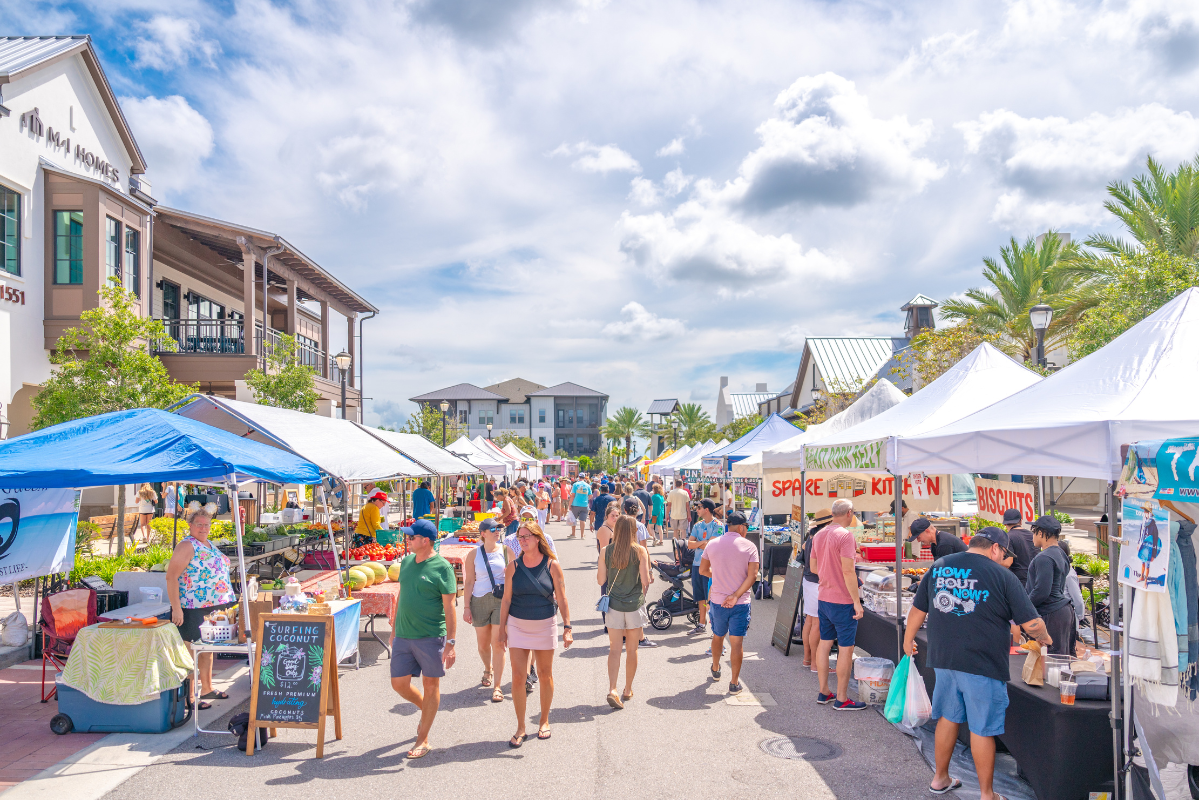
“A lot of the "magic" in a farmers market is the unique bond that's formed between the producer and consumer. Questions are asked, "aha" moments are had, and you leave each stand with not just a product or a sale, but a purpose. THAT is invaluable.”
Jenna Farineau & Liz Amodeo
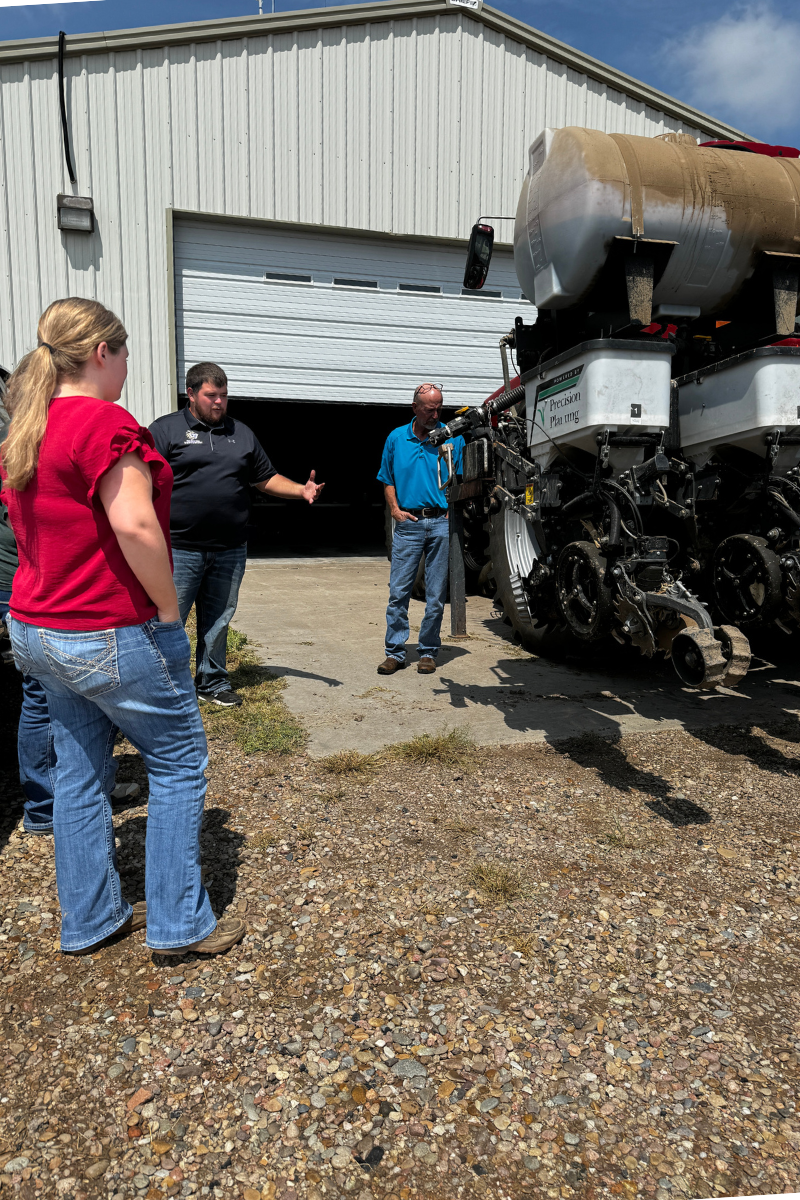
In August, AFT’s Midwest team program staff completed the Soil & Water Conservation Society’s Emerging Leaders Program (ELP) and attended the 80th Soil and Water Conservation Society’s Annual Conference in Costa Mesa, California. Midwest staff Rachel Lechuga, Floreal Crubaugh, and Marlee Giacometti are AFT’s most recent graduates of the second class of the Emerging Leaders Program (fun fact: Helen VanBeck, our Midwest Program Manager) graduated from the first-ever program. Here’s a look back at what the program meant to them and the snapshots that capture their achievements.
Rachel Lechuga
Rachel Irvine
On a thin strip of land between two hayfields in Walpole, New Hampshire, a once-impenetrable wall of invasive plants is being transformed into pollinator-friendly hedgerow. Where bittersweet, honeysuckle, and multiflora rose once dominated, clover is now blooming, pollinators are returning, and the sunlight can actually reach the soil. This remarkable change has been fueled by the passion and persistent work of Holly and her family at Brookfield Farm, powered in part by a Regenerative Livestock Farming (RLF) microgrant from American Farmland Trust.
Lia Raz
High Lawn Farm has been raising Jersey cows in Lee, Massachusetts, for over 100 years. The cows have always had access to pasture, but until recently, the farm relied on continuous grazing. That began to change when the farm received a Regenerative Livestock Farming (RLF) microgrant from American Farmland Trust. The funds helped them fence off 20 acres of previously idle land, giving their dry cows access to fresh, well-rested pasture—and creating space for true rotational grazing for the first time.
Lia Raz
Michael Shulman
Michael Shulman
We dig deeper into one way of quantifying how well practices address the SWAPA-E resources concerns. We turn our attention to another set of three practices: Tree/Shrub Planting, Prescribed Grazing, and Conservation Cover
Michelle Perez, PhD